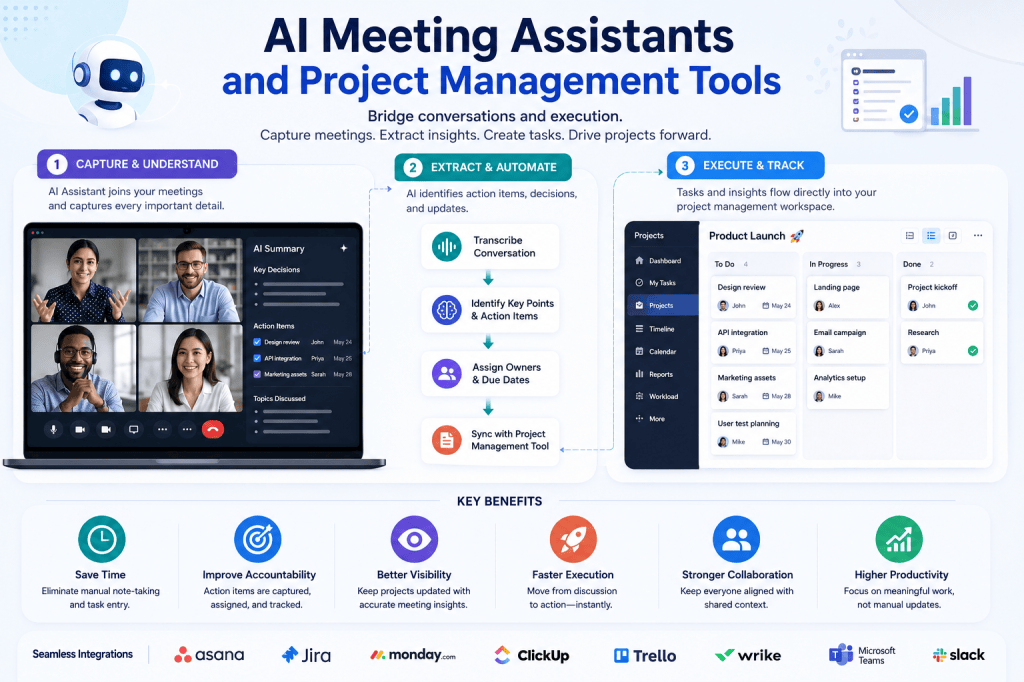
Meetings are where ideas are discussed, decisions are made, and projects move forward. However, turning meeting discussions into completed work has long been a challenge for organizations. Important action items are often forgotten, notes become scattered across different systems, and project updates may never make it into the tools teams rely on every day.
AI meeting assistants are helping solve this problem.
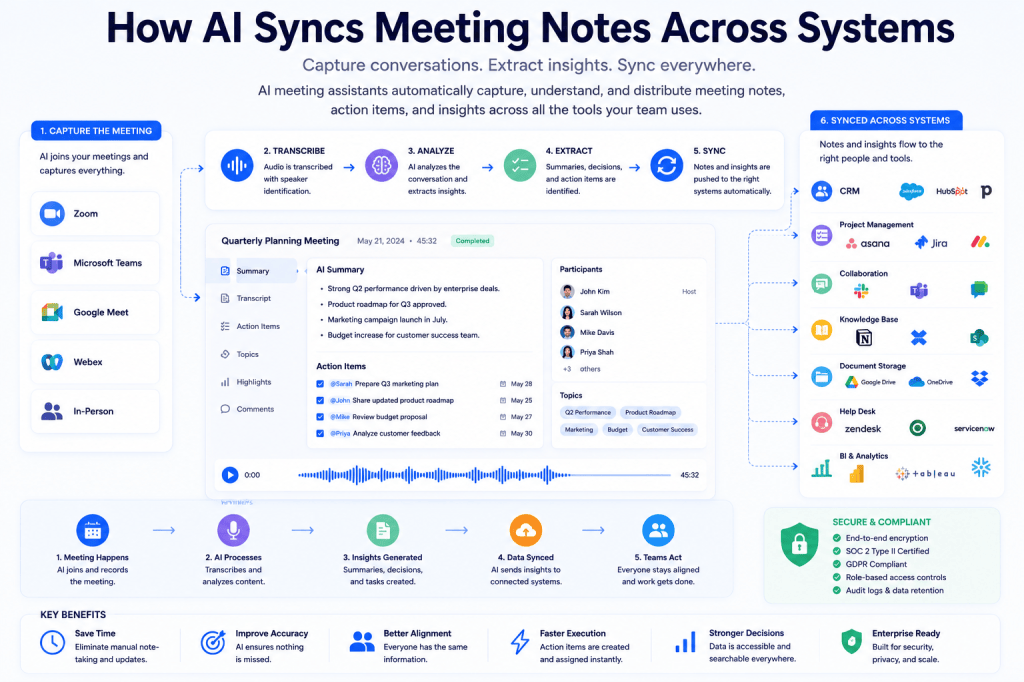
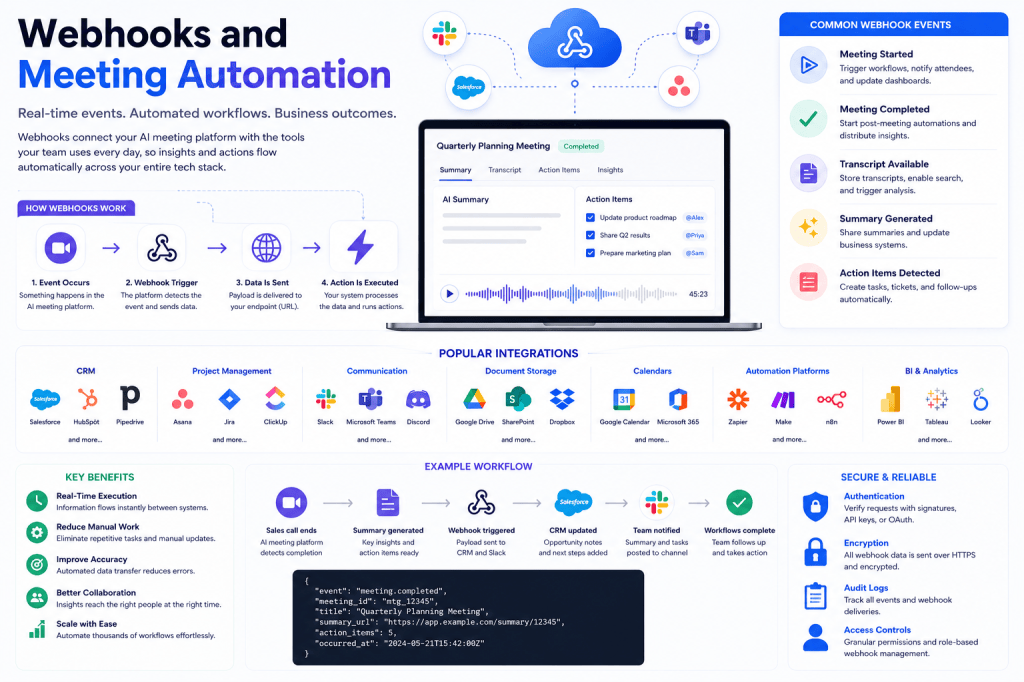
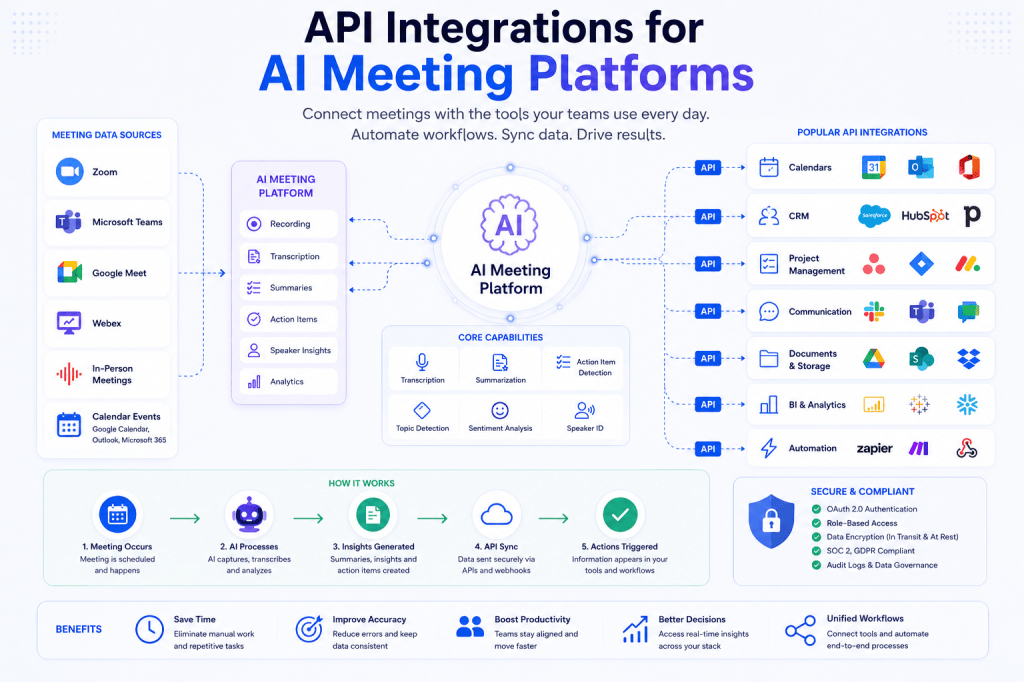
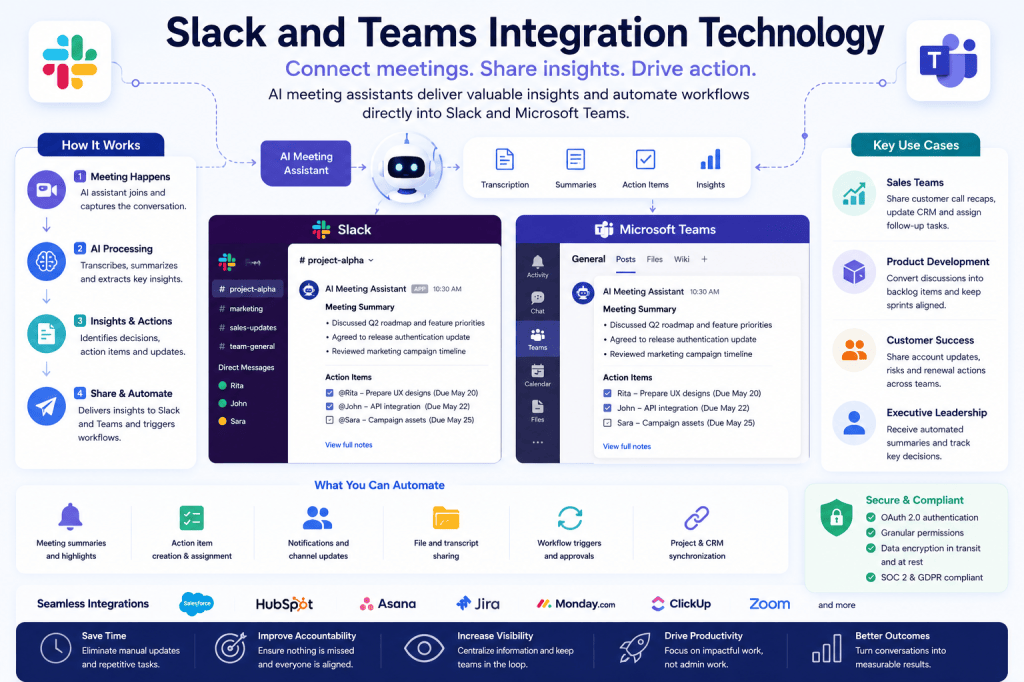
By integrating with project management platforms, AI meeting assistants can automatically capture discussions, identify tasks, assign responsibilities, and synchronize information directly into project workflows. This creates a seamless connection between what is discussed during meetings and what gets executed afterward.
As organizations seek greater efficiency, visibility, and accountability, the combination of AI meeting assistants and project management tools is becoming a critical component of modern workplace productivity.
What Are AI Meeting Assistants?
AI meeting assistants are software solutions that use artificial intelligence to capture, analyze, and organize meeting information.
These tools can:
- Record meetings automatically
- Generate transcripts
- Create summaries
- Identify key decisions
- Detect action items
- Assign responsibilities
- Analyze conversation trends
- Generate follow-up recommendations
Rather than relying on manual note-taking, teams gain a structured and searchable record of every discussion.
What Are Project Management Tools?
Project management platforms help teams organize work, manage tasks, track deadlines, and collaborate efficiently.
Popular project management solutions include:
- Asana
- Jira
- Monday.com
- ClickUp
- Trello
- Wrike
- Smartsheet
- Microsoft Project
- Notion
These tools provide visibility into project progress while helping teams coordinate tasks and resources.
However, project management systems are only as effective as the information entered into them. This is where AI meeting assistants create significant value.
Why Integration Matters
Many project updates originate during meetings.
Teams discuss:
- New requirements
- Project milestones
- Risks and blockers
- Resource allocation
- Timeline changes
- Customer feedback
- Product decisions
Traditionally, someone must manually document these discussions and update project management systems afterward.
This process often leads to:
- Missed action items
- Incomplete documentation
- Delayed updates
- Communication gaps
- Reduced accountability
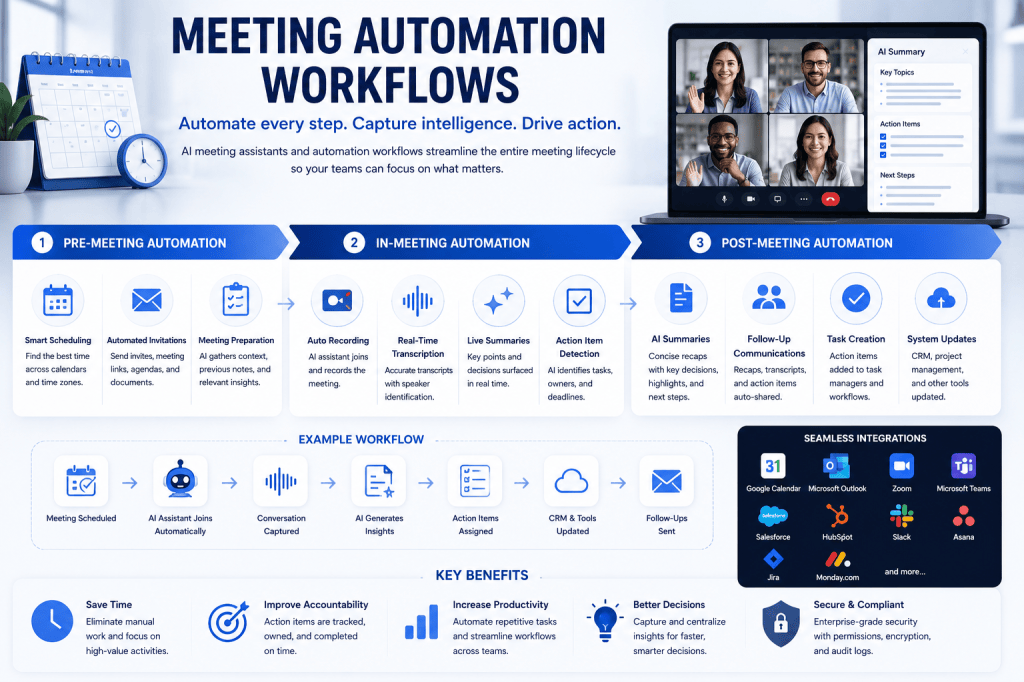
AI meeting assistants eliminate much of this manual work by automatically converting conversations into structured project data.
How AI Meeting Assistants Integrate with Project Management Tools
1. Meeting Capture
The workflow begins when the AI assistant joins a meeting.
The system captures:
- Audio conversations
- Speaker information
- Meeting metadata
- Shared discussion points
Every conversation becomes a searchable record.
2. Automatic Transcription
Speech recognition technology converts discussions into accurate transcripts.
This ensures project information is documented without requiring participants to take extensive notes.
3. Action Item Detection
AI models analyze conversations to identify tasks and commitments.
For example:
- “John will complete the design review by Friday.”
- “The engineering team will deploy the update next week.”
- “Marketing will create campaign assets before launch.”
The AI recognizes these statements as actionable tasks.
4. Task Creation
Detected action items can automatically create tasks within project management platforms.
Tasks may include:
- Assigned owners
- Due dates
- Priority levels
- Project associations
- Supporting context
This reduces manual task entry and ensures commitments are tracked.
5. Project Updates
AI-generated summaries can be synchronized with project records.
Examples include:
- Sprint updates
- Milestone progress
- Decision logs
- Risk assessments
- Stakeholder feedback
Project information remains current without additional administrative work.
Benefits for Project Teams
Reduced Administrative Work
Project managers often spend significant time documenting meetings and updating systems.
Automation reduces workloads by:
- Creating tasks automatically
- Generating summaries
- Updating project records
- Distributing meeting notes
Teams can focus more on execution and less on documentation.
Improved Accountability
One of the most valuable benefits is improved accountability.
When action items are automatically identified and assigned:
- Responsibilities become clear
- Deadlines are documented
- Progress can be tracked
- Follow-up becomes easier
This reduces the likelihood of missed commitments.
Better Visibility
Project stakeholders gain access to more complete information.
Meeting outcomes become visible within project management systems, allowing teams to understand:
- What decisions were made
- Why changes occurred
- Who owns specific tasks
- How projects are progressing
This improves transparency across the organization.
Faster Project Execution
By eliminating delays between meetings and task creation, work begins sooner.
Automated workflows accelerate:
- Task assignment
- Team coordination
- Decision implementation
- Project momentum
The result is faster execution and improved productivity.
Use Cases Across Different Teams
Product Development Teams
Product teams frequently discuss:
- Feature requirements
- User feedback
- Roadmap priorities
- Engineering dependencies
AI meeting assistants can automatically convert discussions into backlog items and project updates.
Marketing Teams
Marketing meetings often generate:
- Campaign tasks
- Content assignments
- Launch timelines
- Creative reviews
Integrations ensure action items are immediately reflected in project boards.
Engineering Teams
Development teams can automate:
- Sprint planning updates
- Bug tracking
- Technical action items
- Release preparation tasks
This helps maintain accurate project visibility.
Customer Success Teams
Customer-facing teams can synchronize:
- Client requests
- Escalations
- Renewal actions
- Product feedback
Meeting insights flow directly into operational workflows.
Popular Project Management Integrations
Many AI meeting assistants integrate with leading project management platforms, including:
Asana
Automatically create tasks and update projects based on meeting discussions.
Jira
Convert meeting action items into development tickets and sprint tasks.
Monday.com
Synchronize meeting outcomes with boards, timelines, and workflows.
ClickUp
Create tasks, assign owners, and update project statuses automatically.
Trello
Generate cards directly from action items discussed during meetings.
Notion
Store meeting summaries and project insights within collaborative workspaces.
Security and Compliance Considerations
Because project meetings often contain sensitive information, organizations should evaluate:
- Access controls
- Data encryption
- Audit logging
- Permission management
- Data retention policies
- GDPR compliance
- SOC 2 certifications
Secure integrations help protect project data while enabling automation.
The Future of AI-Powered Project Management
The relationship between AI meeting assistants and project management tools is expected to become even more sophisticated.
Future capabilities may include:
- Automatic project status reporting
- Predictive risk detection
- Resource allocation recommendations
- Deadline forecasting
- Intelligent workload balancing
- Automated project documentation
- AI-generated project plans
Instead of simply recording meetings, AI systems will increasingly serve as active project coordinators that help teams manage work more effectively.
Conclusion
AI meeting assistants and project management tools are transforming how organizations move from discussion to execution. By automatically capturing conversations, identifying action items, updating project records, and synchronizing information across platforms, these integrations eliminate administrative overhead and improve team productivity.
As businesses continue to adopt AI-powered workflows, the connection between meeting intelligence and project management will become a fundamental component of successful project execution. Organizations that embrace these technologies can improve accountability, accelerate delivery, and ensure that every meeting drives meaningful progress.

 Meeting Notes AI