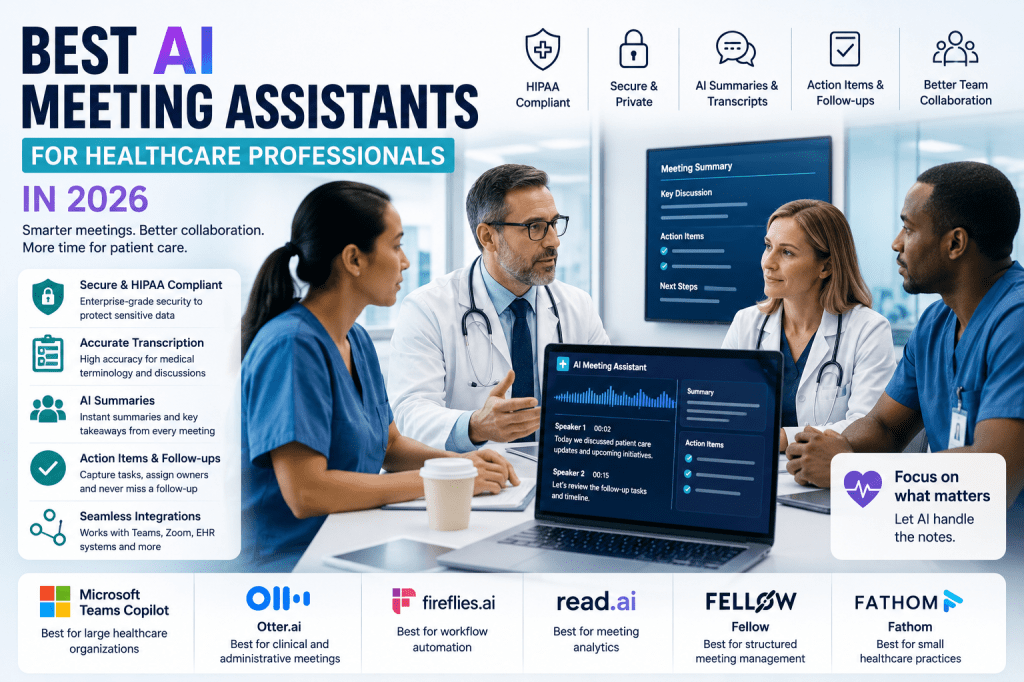
Healthcare professionals spend a significant amount of time documenting patient interactions, attending team meetings, coordinating care, and managing administrative tasks. While patient care remains the top priority, documentation and communication requirements can create a substantial workload. AI meeting assistants are increasingly helping healthcare organizations improve efficiency by automating note-taking, generating summaries, and capturing important decisions from meetings and consultations.
In this guide, we’ll explore the best AI meeting assistants for healthcare professionals in 2026 and examine which solutions are best suited for clinical, administrative, and operational healthcare environments.
Why Healthcare Professionals Need AI Meeting Assistants
Healthcare teams face unique communication challenges, including:
- Multidisciplinary care coordination
- Administrative meetings
- Patient case discussions
- Compliance requirements
- Staff training sessions
- Shift handovers
- Clinical documentation workloads
AI meeting assistants can help reduce manual note-taking and ensure important information is captured accurately and consistently.
What Healthcare Organizations Should Look For
Security and Compliance
Healthcare organizations should prioritize:
- HIPAA compliance (where applicable)
- Strong encryption
- Access controls
- Data retention policies
- Secure cloud infrastructure
Accurate Transcription
Medical terminology can be complex, making transcription accuracy particularly important.
Look for:
- Speaker identification
- High transcription accuracy
- Searchable transcripts
- Custom vocabulary support
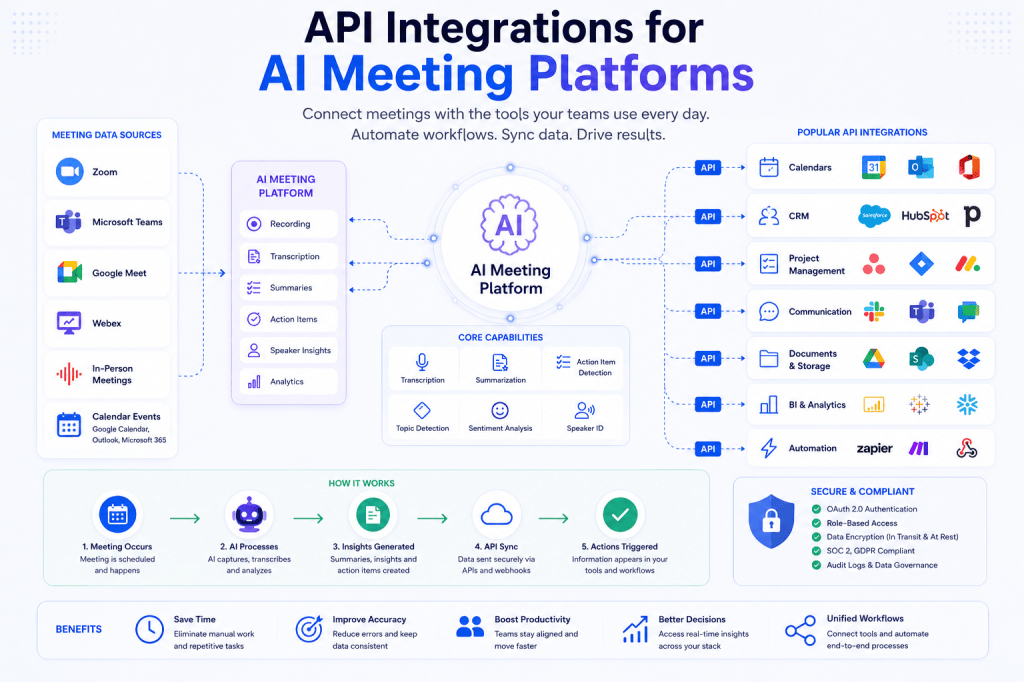
Integration Capabilities
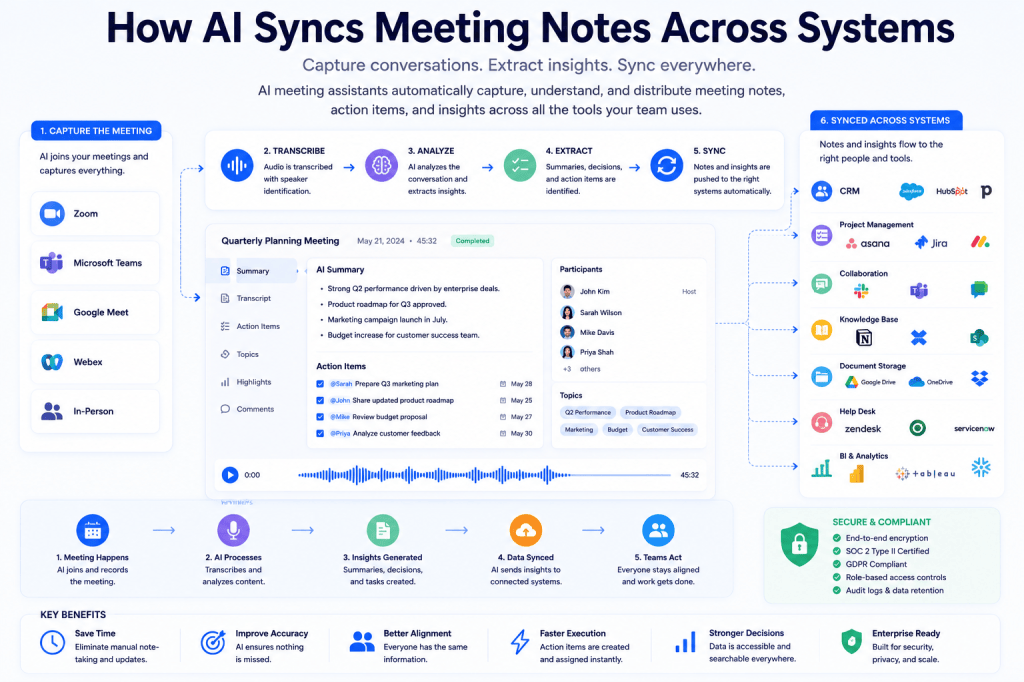
Healthcare teams benefit from integrations with:
- Microsoft Teams
- Zoom
- Google Meet
- Project management platforms
- Collaboration tools
- Electronic Health Record (EHR) systems where supported
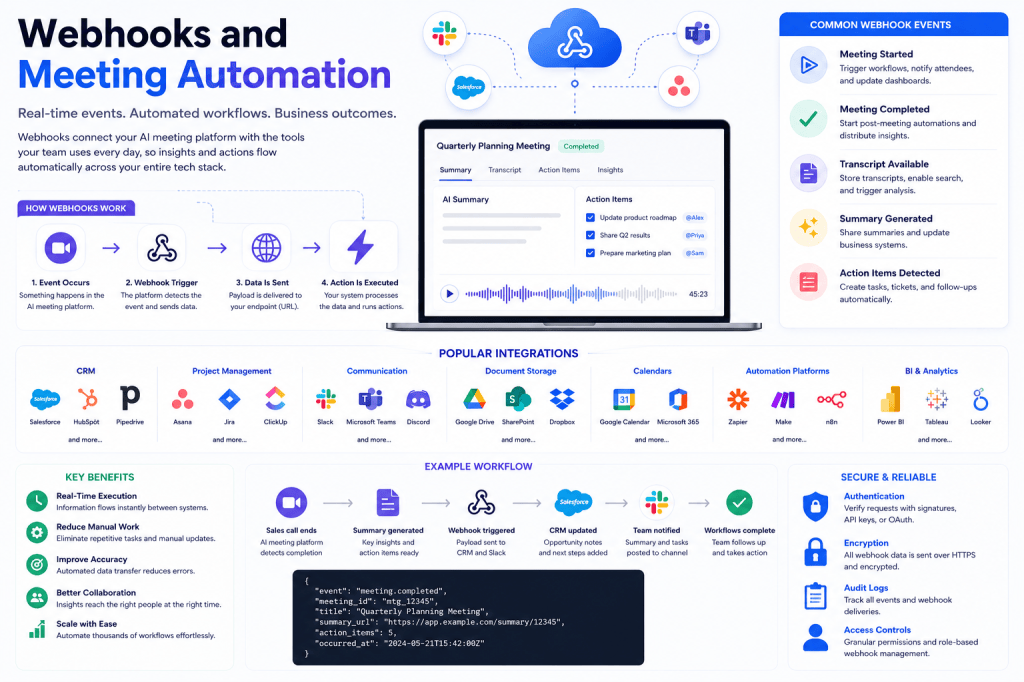
Workflow Automation
Useful features include:
- Automated summaries
- Action item extraction
- Follow-up reminders
- Meeting analytics
Best AI Meeting Assistants for Healthcare Professionals
1. Microsoft Teams Copilot
Best for Large Healthcare Organizations
Many hospitals and healthcare providers already rely on Microsoft 365.
Key features:
- AI-generated meeting recaps
- Action item tracking
- Microsoft ecosystem integration
- Enterprise security controls
- Team collaboration tools
Pros
- Strong security features
- Excellent for large organizations
- Scalable deployment
Cons
- Best suited for Microsoft environments
2. Otter.ai
Best for Clinical and Administrative Meetings
Otter.ai offers highly accurate transcription and collaborative note-taking.
Key features:
- Real-time transcription
- Speaker identification
- Searchable transcripts
- AI-generated summaries
- Shared meeting notes
Pros
- Excellent transcription quality
- Easy to use
- Strong collaboration capabilities
Cons
- Advanced features require premium plans
3. Fireflies.ai
Best for Workflow Automation
Fireflies.ai helps healthcare teams automate meeting documentation and follow-up tasks.
Key features:
- Meeting recording
- AI summaries
- Action item tracking
- Workflow automation
- CRM and platform integrations
Pros
- Powerful automation features
- Extensive integrations
- Good collaboration support
Cons
- Some configuration may be required
4. Read AI
Best for Meeting Analytics
Read AI provides insights into meeting participation and effectiveness.
Key features:
- Automated summaries
- Meeting scorecards
- Participation analytics
- Engagement tracking
- Action item management
Pros
- Strong reporting capabilities
- Helpful for management teams
Cons
- Analytics may exceed the needs of smaller practices
5. Fellow
Best for Healthcare Leadership Teams
Fellow focuses on structured meetings and accountability.
Key features:
- Collaborative agendas
- AI-generated notes
- Meeting templates
- Action tracking
- Team collaboration
Pros
- Excellent meeting organization
- Strong accountability features
Cons
- Less focused on analytics
6. Fathom
Best for Small Practices
Fathom offers a simple and user-friendly experience for smaller healthcare organizations.
Key features:
- Instant summaries
- Meeting highlights
- Action items
- CRM integrations
- Easy deployment
Pros
- Simple setup
- High-quality summaries
Cons
- Fewer enterprise-focused capabilities
Comparison Table
| Tool | Best For | Security | Transcription | Analytics |
|---|---|---|---|---|
| Microsoft Teams Copilot | Large Organizations | Excellent | Very Good | Excellent |
| Otter.ai | Clinical Meetings | Strong | Excellent | Good |
| Fireflies.ai | Automation | Strong | Very Good | Good |
| Read AI | Analytics | Strong | Very Good | Excellent |
| Fellow | Leadership Teams | Strong | Good | Good |
| Fathom | Small Practices | Good | Very Good | Good |
Benefits of AI Meeting Assistants in Healthcare
Reduced Administrative Burden
Healthcare professionals spend less time taking notes and more time focusing on patient care and collaboration.
Better Team Communication
Meeting summaries ensure all participants remain aligned on treatment plans, projects, and operational initiatives.
Improved Documentation
AI-generated notes help capture important discussions consistently and accurately.
Enhanced Knowledge Sharing
Searchable meeting archives make it easier to access historical decisions and discussions.
Greater Accountability
Action items and follow-up tasks can be tracked automatically.
Choosing the Right Solution
The ideal AI meeting assistant depends on your organization’s needs:
- Choose Microsoft Teams Copilot for enterprise healthcare systems.
- Choose Otter.ai for transcription accuracy.
- Choose Fireflies.ai for workflow automation.
- Choose Read AI for analytics and reporting.
- Choose Fellow for structured meeting management.
- Choose Fathom for smaller healthcare practices.
Frequently Asked Questions
Can AI meeting assistants be used in healthcare?
Yes. Many healthcare organizations use AI meeting assistants for administrative meetings, training sessions, care coordination, and operational discussions. Organizations should always evaluate compliance and security requirements before implementation.
Do AI meeting assistants replace medical documentation systems?
No. AI meeting assistants are designed to support communication and documentation workflows, not replace official medical record systems.
Are AI-generated meeting notes accurate?
Most leading platforms provide highly accurate transcription and summarization, but important information should always be reviewed before being used in critical healthcare processes.
Can healthcare teams use AI meeting assistants for remote collaboration?
Yes. AI meeting assistants are particularly useful for remote and hybrid healthcare teams that need consistent documentation and knowledge sharing.
Final Thoughts
Healthcare professionals face increasing demands on their time, making efficient communication and documentation more important than ever. AI meeting assistants can help reduce administrative burdens, improve collaboration, and ensure important information is captured accurately. By choosing the right platform, healthcare organizations can streamline workflows while allowing professionals to focus more on delivering quality patient care.

 Meeting Notes AI