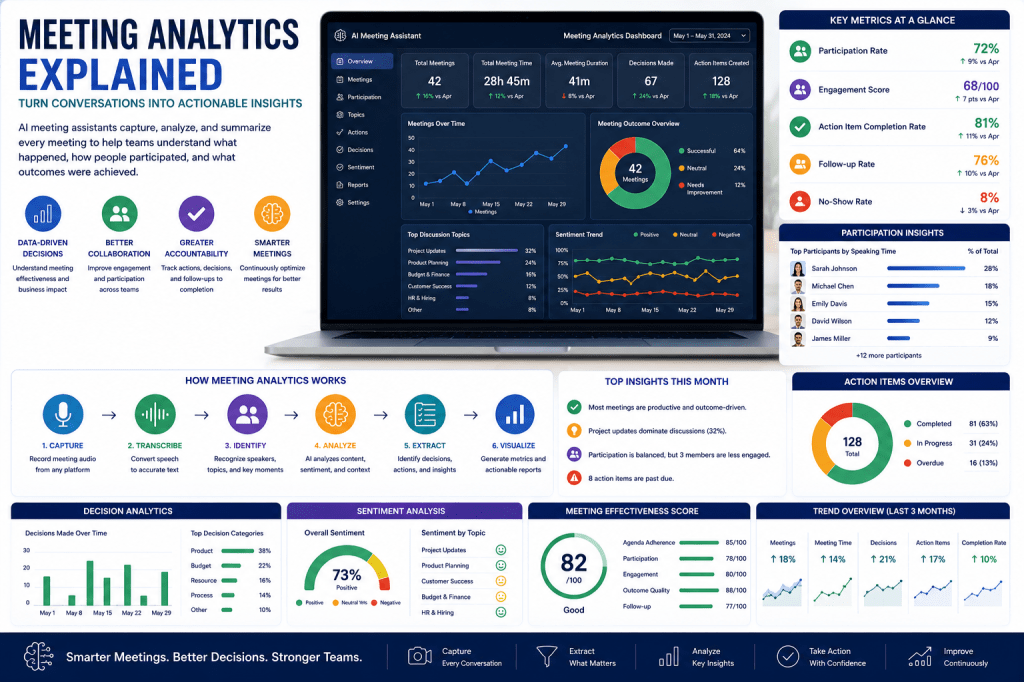
Meetings are one of the most common forms of communication in modern organizations. Teams use meetings to make decisions, share updates, solve problems, coordinate projects, and align around business objectives. Despite the enormous amount of time spent in meetings, organizations have traditionally had very little visibility into how effective those meetings actually are.
This is changing with the rise of Meeting Analytics. Modern AI meeting assistants can analyze conversations, participant behavior, decisions, action items, engagement levels, and communication patterns to generate valuable insights about meeting performance and business outcomes.
Rather than simply recording meetings, AI-powered analytics help organizations understand what happens during meetings, how teams collaborate, and how meeting outcomes impact productivity. Meeting analytics has become a foundational component of meeting intelligence platforms and is rapidly transforming workplace collaboration.
What Are Meeting Analytics?
Meeting analytics refers to the collection, measurement, analysis, and reporting of data generated during meetings.
AI meeting assistants analyze various aspects of conversations and participant interactions to generate actionable insights.
Examples include:
- Meeting duration
- Participation levels
- Speaker engagement
- Action item volume
- Decision frequency
- Discussion topics
- Sentiment trends
- Follow-up completion rates
- Meeting effectiveness metrics
These analytics help organizations move beyond intuition and make data-driven decisions about communication and collaboration.
Why Meeting Analytics Matter
Most organizations conduct hundreds or thousands of meetings every year.
Without analytics, it can be difficult to answer questions such as:
- Are meetings productive?
- Are decisions being made?
- Who participates most?
- Are action items being completed?
- Which topics consume the most time?
- Are teams aligned?
- Are projects progressing as planned?
Meeting analytics provides objective visibility into these questions.
Benefits include:
- Improved productivity
- Better collaboration
- Stronger accountability
- More informed decision-making
- Enhanced team performance
- Better resource utilization
Organizations can use analytics to continuously improve how meetings are conducted.
How Meeting Analytics Works
Meeting analytics relies on multiple AI technologies working together.
The process typically includes:
- Audio capture
- Speech recognition
- Speaker identification
- Natural language processing
- Meeting intelligence analysis
- Metric generation
- Reporting and visualization
Each stage contributes to transforming conversations into measurable data.
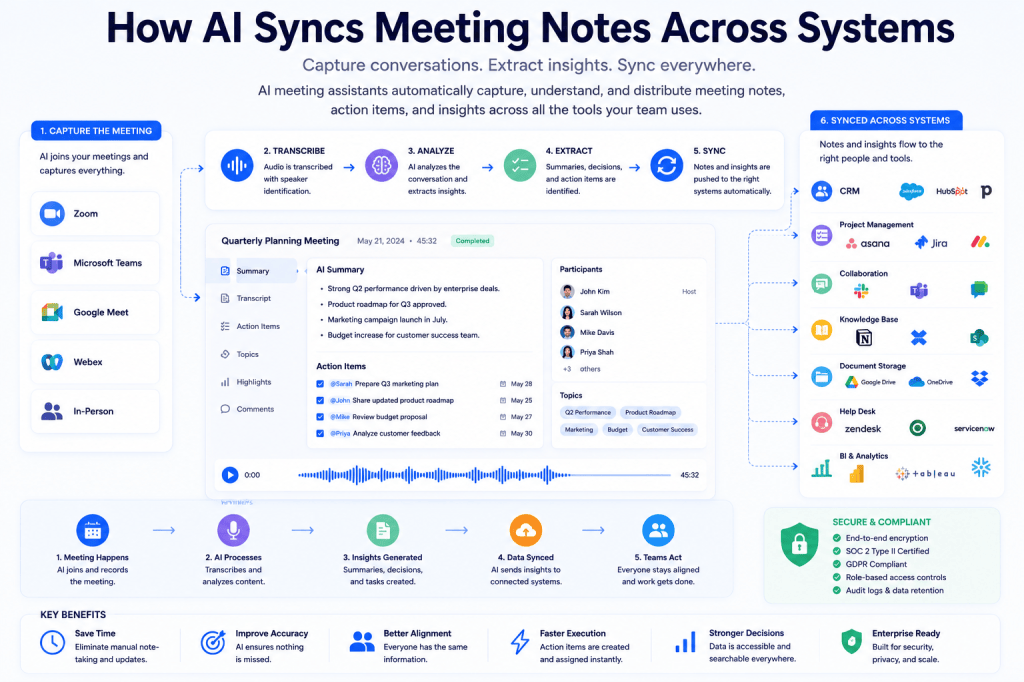
Step 1: Audio Capture and Transcription
The process begins with recording and transcription.
AI meeting assistants capture conversations from:
- Zoom
- Microsoft Teams
- Google Meet
- Phone calls
- Hybrid meetings
- In-person discussions
Automatic Speech Recognition (ASR) converts spoken language into text.
The resulting transcript serves as the foundation for analytics generation.
Step 2: Speaker Identification
Speaker diarization identifies who is speaking throughout the meeting.
This enables analytics such as:
- Speaking time per participant
- Participation frequency
- Discussion balance
- Engagement levels
Speaker identification is critical for measuring collaboration dynamics.
Step 3: Topic Detection
AI systems identify discussion themes.
Examples:
- Product Planning
- Marketing Strategy
- Budget Reviews
- Customer Success
- Technical Infrastructure
Topic detection helps organizations understand where meeting time is being spent.
Step 4: Meeting Intelligence Analysis
Modern AI meeting assistants analyze conversations to identify:
- Decisions
- Action items
- Risks
- Opportunities
- Sentiment
- Follow-up requirements
These insights become the basis for advanced analytics and reporting.
Core Meeting Analytics Metrics
Meeting Duration
One of the simplest but most important metrics.
Organizations can track:
- Average meeting length
- Meeting frequency
- Time spent in meetings
- Trends over time
This helps identify potential inefficiencies.
Participation Analytics
Participation analytics measure how individuals contribute during meetings.
Examples include:
Speaking Time
How long each participant speaks.
Participation Rate
How often individuals contribute.
Conversation Balance
Whether discussions are dominated by a few participants.
Silent Participants
Identifying team members who rarely contribute.
These metrics help improve meeting inclusivity and engagement.
Action Item Analytics
AI meeting assistants automatically detect action items and track them over time.
Examples include:
- Action items per meeting
- Task ownership distribution
- Completion rates
- Overdue tasks
- Follow-up trends
Organizations can evaluate how effectively meetings translate into action.
Decision Analytics
Decision analytics focus on outcomes rather than discussion.
Metrics may include:
- Decisions made per meeting
- Decision categories
- Decision frequency
- Decision ownership
- Time to decision
This helps organizations understand whether meetings are producing meaningful results.
Topic Analytics
Topic analytics reveal what teams spend time discussing.
Examples:
- Most discussed topics
- Topic duration
- Topic frequency
- Emerging themes
- Recurring issues
Organizations can identify patterns and priorities across meetings.
Sentiment Analytics
Sentiment analysis measures emotional tone and engagement.
Examples include:
- Positive sentiment
- Neutral sentiment
- Negative sentiment
- Concern indicators
- Team morale trends
These insights help leaders understand team dynamics and organizational health.
Meeting Effectiveness Metrics
Some AI meeting assistants generate effectiveness scores.
Factors may include:
- Decision count
- Action item count
- Participation balance
- Agenda adherence
- Engagement levels
- Meeting duration
These metrics help organizations improve meeting quality.
Customer-Facing Meeting Analytics
Sales and customer success teams often use specialized analytics.
Examples include:
Customer Sentiment
Understanding customer attitudes.
Objection Tracking
Identifying common concerns.
Buying Signals
Recognizing purchase intent.
Competitive Mentions
Tracking references to competitors.
These insights support revenue growth and customer retention.
Team Collaboration Analytics
Meeting analytics can reveal how teams work together.
Examples include:
- Cross-functional collaboration
- Communication patterns
- Meeting network analysis
- Team engagement trends
Organizations can use these insights to strengthen collaboration.
Meeting Analytics Dashboards
Most AI meeting assistants present analytics through dashboards.
Typical dashboard elements include:
Participation Charts
Visualizing speaker activity.
Action Item Reports
Tracking task completion.
Topic Analysis
Showing discussion themes.
Meeting Trends
Monitoring performance over time.
Team Insights
Highlighting collaboration patterns.
Dashboards make complex information easy to understand.
Meeting Analytics and Knowledge Management
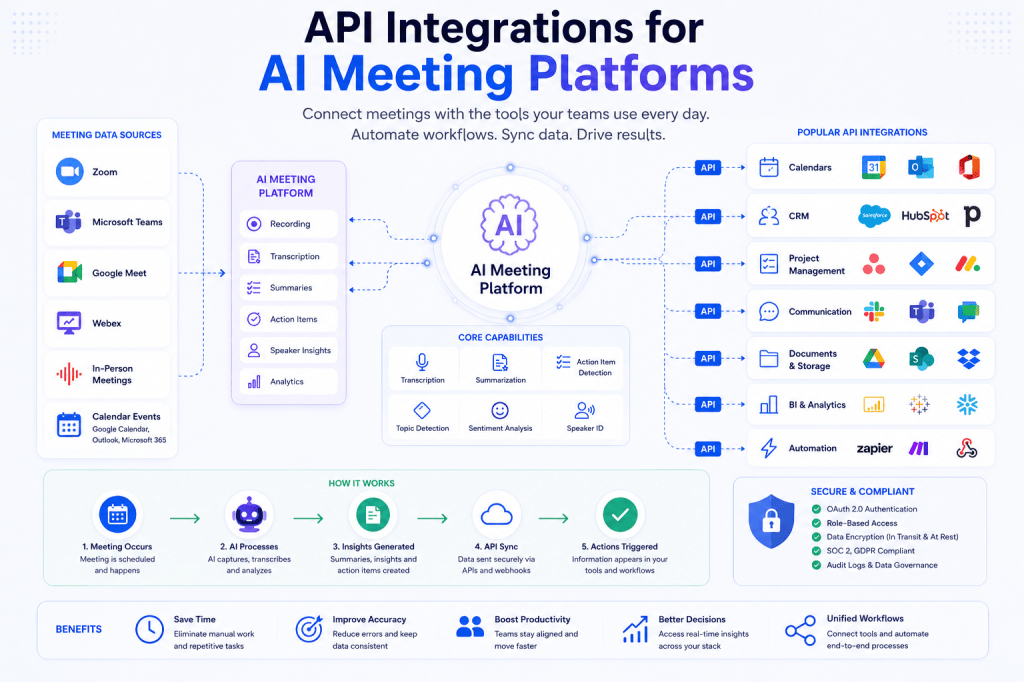
Analytics become even more valuable when integrated with organizational knowledge systems.
Meeting insights can be connected to:
- Project management tools
- CRM systems
- Documentation repositories
- Knowledge bases
- Business intelligence platforms
This creates a comprehensive view of organizational activity.
Common Challenges
Although meeting analytics offers tremendous value, challenges remain.
Data Quality
Poor audio can affect accuracy.
Context Interpretation
Human conversations are complex.
Privacy Concerns
Meeting data requires careful governance.
Metric Overload
Too many metrics can create confusion.
Cross-Meeting Comparisons
Different meeting types may require different evaluation criteria.
Organizations should focus on metrics that support specific business goals.
The Future of Meeting Analytics
Meeting analytics is evolving rapidly.
Future capabilities may include:
Predictive Analytics
Forecasting project risks and outcomes.
Real-Time Analytics
Providing live meeting intelligence.
Organizational Trend Analysis
Identifying patterns across thousands of meetings.
AI Recommendations
Suggesting improvements automatically.
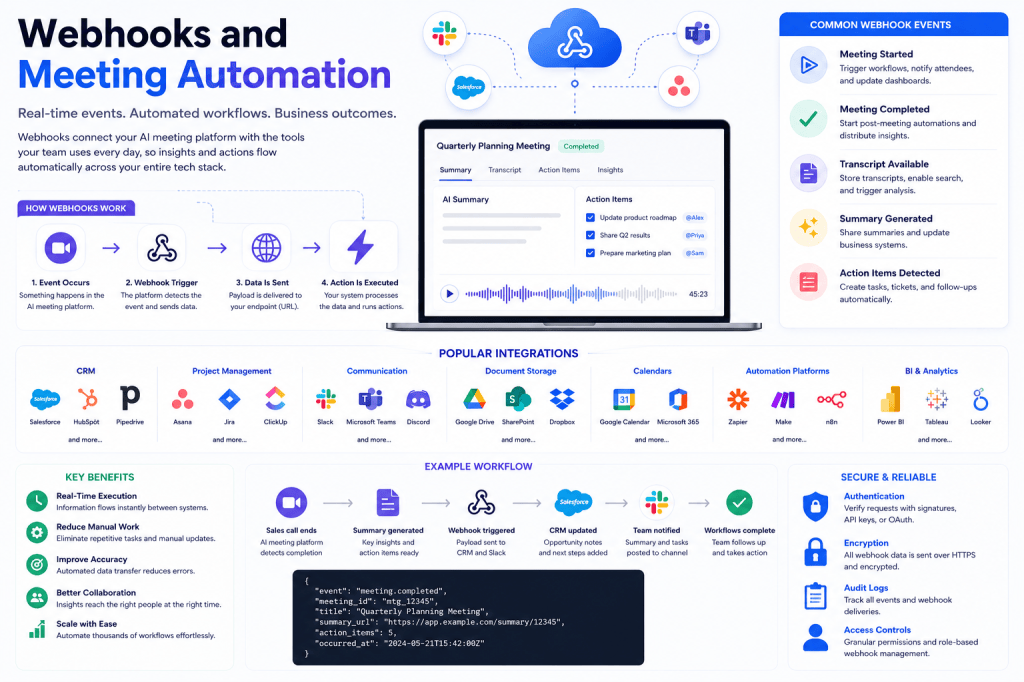
Workflow Automation
Turning insights into actions without manual intervention.
These capabilities will transform meetings into powerful sources of business intelligence.
Meeting Analytics vs Traditional Reporting
Traditional meeting reports typically rely on:
- Manual notes
- Subjective observations
- Inconsistent documentation
Meeting analytics provides:
- Automated measurement
- Objective insights
- Continuous monitoring
- Scalable reporting
This shift enables organizations to manage collaboration more effectively.
Why Meeting Analytics Is Becoming Essential
As organizations become increasingly data-driven, meetings can no longer remain unmeasured activities.
Executives want answers to questions such as:
- Are teams aligned?
- Are decisions being made efficiently?
- Are projects progressing?
- Are employees engaged?
- Are customers satisfied?
Meeting analytics helps answer these questions using real meeting data.
Conclusion
Meeting Analytics is transforming how organizations understand collaboration, communication, and productivity. By combining speech recognition, speaker identification, natural language processing, sentiment analysis, action item detection, and meeting intelligence technologies, AI meeting assistants can convert conversations into actionable business insights. These analytics help organizations improve meeting effectiveness, strengthen accountability, identify risks, track decisions, and optimize team performance. As AI-powered workplace tools continue to evolve, meeting analytics will become an increasingly important source of business intelligence and organizational knowledge.
Excerpt
Learn how meeting analytics helps AI meeting assistants transform conversations into actionable business intelligence through participation tracking, decision analysis, action item reporting, sentiment analysis, and collaboration insights.

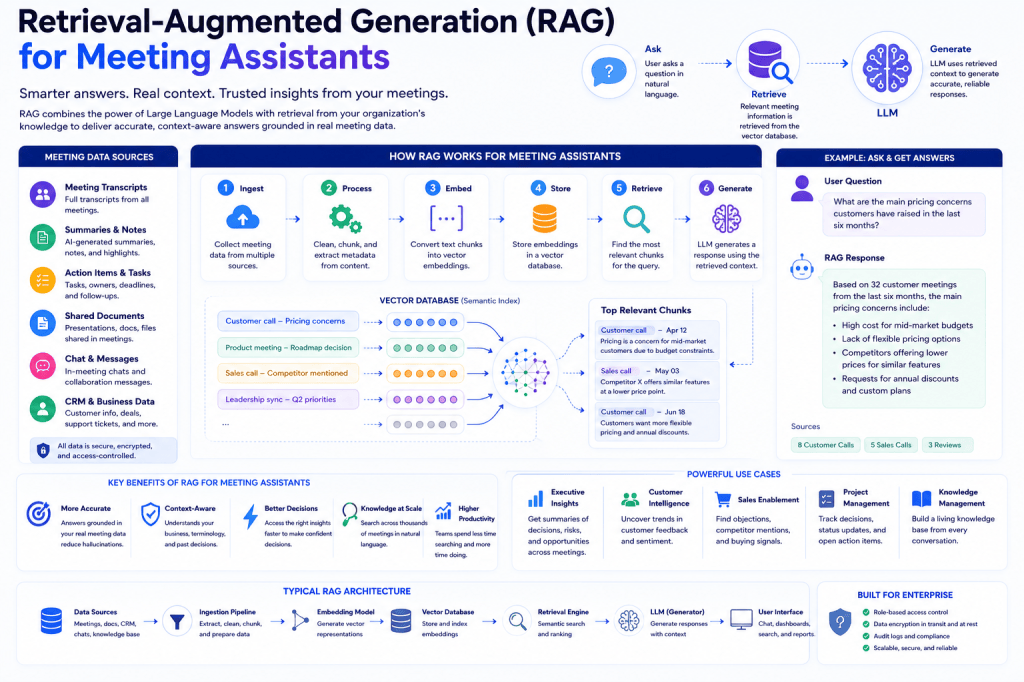
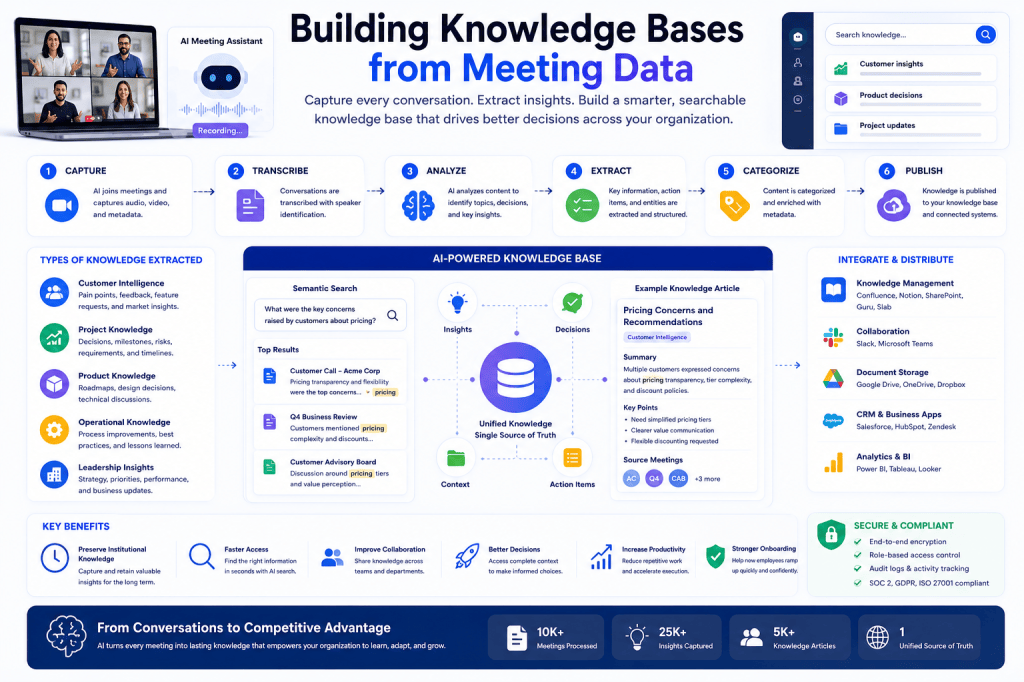
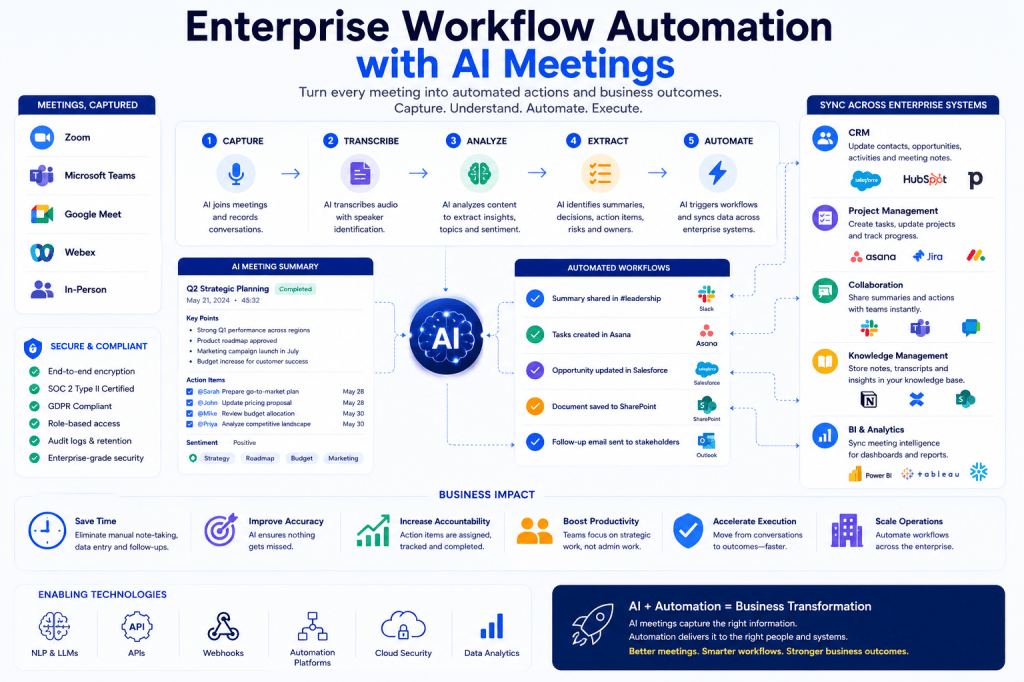
 Meeting Notes AI