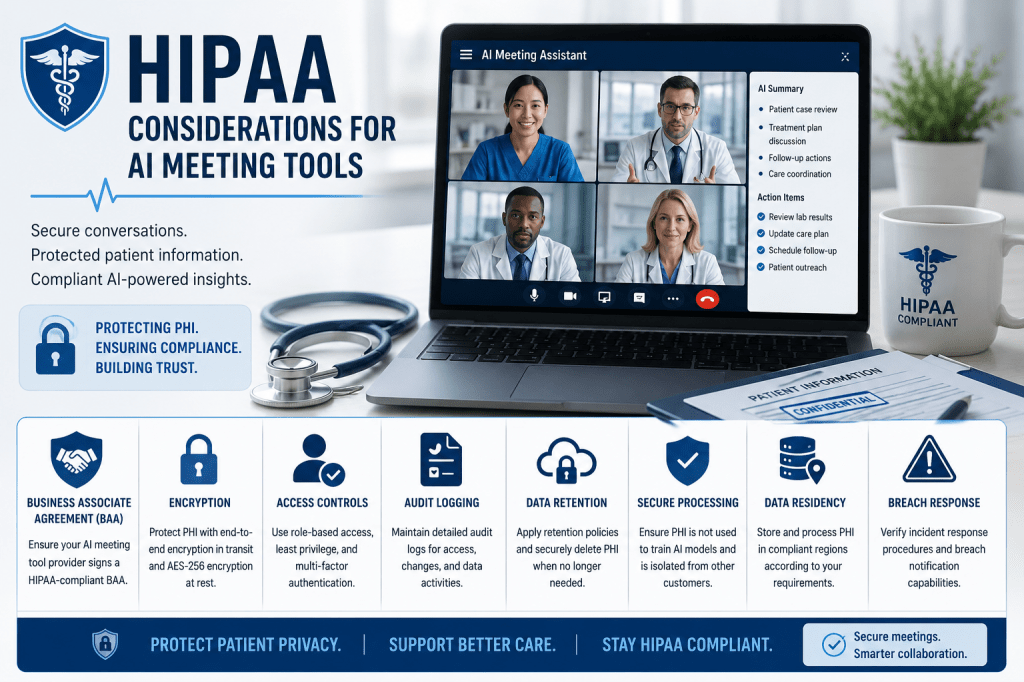
Artificial Intelligence is transforming workplace collaboration. AI Meeting Tools can automatically record conversations, generate transcripts, create summaries, identify action items, and provide valuable insights from meetings. While these capabilities offer significant productivity benefits, organizations operating in healthcare environments face additional responsibilities regarding privacy and security.
Healthcare providers, hospitals, insurance companies, and healthcare technology organizations often discuss highly sensitive patient information during meetings. When AI Meeting Tools are used in these environments, organizations must consider compliance with the Health Insurance Portability and Accountability Act (HIPAA).
Understanding HIPAA requirements is essential before deploying AI-powered meeting solutions that may process protected health information.
What Is HIPAA?
The Health Insurance Portability and Accountability Act (HIPAA) is a United States federal law designed to protect sensitive health information.
HIPAA establishes standards for:
- Privacy
- Security
- Data access
- Information sharing
- Breach notification
The law applies to organizations that create, receive, maintain, or transmit protected health information (PHI).
HIPAA seeks to ensure that patient information remains confidential while still allowing healthcare providers to deliver effective care.
What Is Protected Health Information (PHI)?
Protected Health Information refers to individually identifiable health information.
Examples include:
- Patient names
- Medical record numbers
- Health insurance information
- Diagnoses
- Treatment plans
- Test results
- Prescription information
- Appointment details
- Billing information
PHI can exist in many forms, including:
- Written documents
- Emails
- Audio recordings
- Video recordings
- Meeting transcripts
- AI-generated summaries
If an AI Meeting Tool processes PHI, HIPAA requirements may apply.
Why HIPAA Matters for AI Meeting Tools
Modern AI Meeting Tools often perform tasks such as:
- Recording virtual meetings
- Transcribing conversations
- Generating summaries
- Extracting action items
- Creating searchable knowledge bases
In healthcare settings, these meetings may involve:
- Patient case discussions
- Clinical reviews
- Care coordination
- Insurance claims
- Compliance meetings
- Medical research
- Administrative operations
As a result, AI Meeting Tools may store and process PHI.
Organizations must therefore evaluate whether their meeting platform supports HIPAA compliance requirements.
Covered Entities and Business Associates
HIPAA distinguishes between different types of organizations.
Covered Entities
Covered entities include:
- Healthcare providers
- Hospitals
- Clinics
- Health plans
- Healthcare clearinghouses
These organizations are directly responsible for HIPAA compliance.
Business Associates
A Business Associate is a third party that processes PHI on behalf of a covered entity.
Examples include:
- Cloud providers
- Software vendors
- AI service providers
- Meeting intelligence platforms
If an AI Meeting Tool processes PHI, the vendor may qualify as a Business Associate.
This relationship introduces additional compliance obligations.
Business Associate Agreements (BAAs)
One of the most important HIPAA considerations is the Business Associate Agreement.
A BAA is a legal contract between:
- The healthcare organization
- The service provider
The agreement defines:
- Permitted uses of PHI
- Security responsibilities
- Breach notification obligations
- Compliance requirements
Before using an AI Meeting Tool with PHI, organizations should verify whether the vendor offers a Business Associate Agreement.
Many general-purpose AI tools do not provide BAAs.
Without a BAA, using the platform for PHI may create compliance risks.
Recording Healthcare Meetings
Healthcare organizations frequently record meetings for:
- Documentation
- Training
- Care coordination
- Compliance reviews
When recordings contain PHI, organizations should consider:
- Whether recording is necessary
- Who has access to recordings
- How recordings are protected
- How long recordings are retained
Clear policies should govern recording practices.
Participants should understand when recording is active and how information will be used.
Transcription and PHI
AI-powered transcription is often one of the most valuable features of meeting intelligence platforms.
However, healthcare organizations should carefully evaluate:
- Where transcripts are stored
- How transcripts are encrypted
- Who can access transcripts
- Whether transcripts are used for AI model training
Transcripts frequently contain highly sensitive patient information.
Proper safeguards are therefore essential.
AI Summaries and Clinical Information
Many AI Meeting Tools automatically generate summaries.
These summaries may contain:
- Patient names
- Diagnoses
- Treatment discussions
- Care recommendations
Organizations should treat AI-generated summaries with the same level of protection as other PHI-containing records.
Security controls should extend to all AI-generated outputs.
Access Controls
HIPAA requires organizations to limit access to PHI.
AI Meeting Tools should support:
Role-Based Access Control (RBAC)
Permissions based on user responsibilities.
Examples include:
- Administrators
- Physicians
- Nurses
- Compliance staff
- Administrative personnel
Least Privilege Access
Users should only access information necessary for their roles.
Limiting access helps reduce privacy risks and supports compliance requirements.
Encryption Requirements
HIPAA strongly encourages encryption as a safeguard for protecting PHI.
AI Meeting Tools should provide:
Encryption in Transit
Transport Layer Security (TLS) protects information while it moves between systems.
Encryption at Rest
AES-256 encryption protects stored recordings, transcripts, summaries, and related data.
Strong encryption reduces the risk of unauthorized disclosure.
Multi-Factor Authentication
Multi-Factor Authentication (MFA) adds an additional layer of protection.
MFA requires users to verify their identity using multiple factors such as:
- Passwords
- Authentication applications
- Security keys
- Biometrics
MFA significantly reduces the likelihood of account compromise.
Healthcare organizations should strongly consider enabling MFA for all users.
Audit Logging and Monitoring
HIPAA requires organizations to monitor access to PHI.
AI Meeting Tools should provide audit logs that record:
- User logins
- Recording access
- Transcript downloads
- Permission changes
- Administrative actions
- Data exports
Audit trails support:
- Compliance reporting
- Security investigations
- Risk assessments
- Breach response efforts
Visibility into system activity is a key component of HIPAA compliance.
Data Retention Policies
Healthcare organizations often have specific retention requirements.
AI Meeting Tools should allow administrators to:
- Define retention schedules
- Archive records
- Delete obsolete information
- Manage legal holds
Retention policies should align with organizational, legal, and regulatory requirements.
Data Residency and Cloud Infrastructure
Organizations should understand where meeting data is stored.
Important considerations include:
- Data center locations
- Cloud provider security
- Backup procedures
- Disaster recovery capabilities
Many healthcare organizations prefer vendors that provide transparency regarding data storage and infrastructure security.
AI Model Training and PHI
A growing concern involves the use of customer data to train AI models.
Healthcare organizations should ask vendors:
- Is PHI used to train AI models?
- How is customer data isolated?
- Are private AI deployment options available?
- Can data sharing be disabled?
Many organizations prefer platforms that explicitly guarantee customer data will not be used for model training.
Breach Notification Responsibilities
HIPAA includes strict breach notification requirements.
Organizations should understand:
- How breaches are detected
- How incidents are reported
- Vendor notification timelines
- Investigation procedures
A vendor’s incident response capabilities should be carefully evaluated before deployment.
Risk Assessments
HIPAA requires organizations to perform regular risk assessments.
When evaluating AI Meeting Tools, organizations should assess:
- Data flows
- Security controls
- Access management
- Vendor practices
- AI processing methods
- Compliance documentation
Risk assessments help identify vulnerabilities before implementation.
Privacy by Design
The concept of Privacy by Design aligns closely with HIPAA principles.
Healthcare organizations should seek AI Meeting Tools that incorporate:
- Encryption by default
- Strong authentication
- Access restrictions
- Data minimization
- Comprehensive auditing
Security and privacy should be built into the platform from the start rather than added later.
Questions to Ask Vendors
Before selecting an AI Meeting Tool, healthcare organizations should ask:
- Do you offer a Business Associate Agreement?
- How is PHI encrypted?
- Is customer data used for AI training?
- What audit logging capabilities are available?
- How are retention policies managed?
- What certifications do you maintain?
- How do you handle breach notifications?
- Can data be permanently deleted?
- What access controls are supported?
These questions help organizations evaluate compliance readiness.
Best Practices for Healthcare Organizations
To improve security and compliance, organizations should:
- Sign a Business Associate Agreement when required.
- Enable Multi-Factor Authentication.
- Limit access using role-based permissions.
- Encrypt all meeting data.
- Establish retention policies.
- Conduct regular risk assessments.
- Review vendor security documentation.
- Train employees on HIPAA responsibilities.
- Monitor audit logs regularly.
- Verify AI privacy practices.
These measures help reduce risk while preserving the productivity benefits of AI-powered meeting intelligence.
The Future of HIPAA and AI Meeting Intelligence
As AI becomes more integrated into healthcare workflows, regulatory expectations will continue evolving.
Future trends may include:
- Stronger AI governance requirements
- Increased auditing expectations
- Enhanced transparency requirements
- More sophisticated privacy-preserving AI techniques
- Greater scrutiny of AI training practices
Healthcare organizations should monitor both technological and regulatory developments as they expand their use of AI-powered tools.
Conclusion
AI Meeting Tools can provide significant benefits for healthcare organizations by improving documentation, collaboration, and knowledge sharing. However, when protected health information is involved, HIPAA compliance becomes a critical consideration.
Organizations must evaluate Business Associate Agreements, encryption capabilities, access controls, audit logging, retention policies, AI privacy practices, and vendor security controls before deploying meeting intelligence platforms. By implementing appropriate safeguards and selecting vendors that support HIPAA requirements, healthcare organizations can take advantage of AI-powered meeting technology while protecting patient privacy and maintaining regulatory compliance.
The most successful healthcare AI deployments will be those that balance innovation with strong privacy, security, and compliance practices.

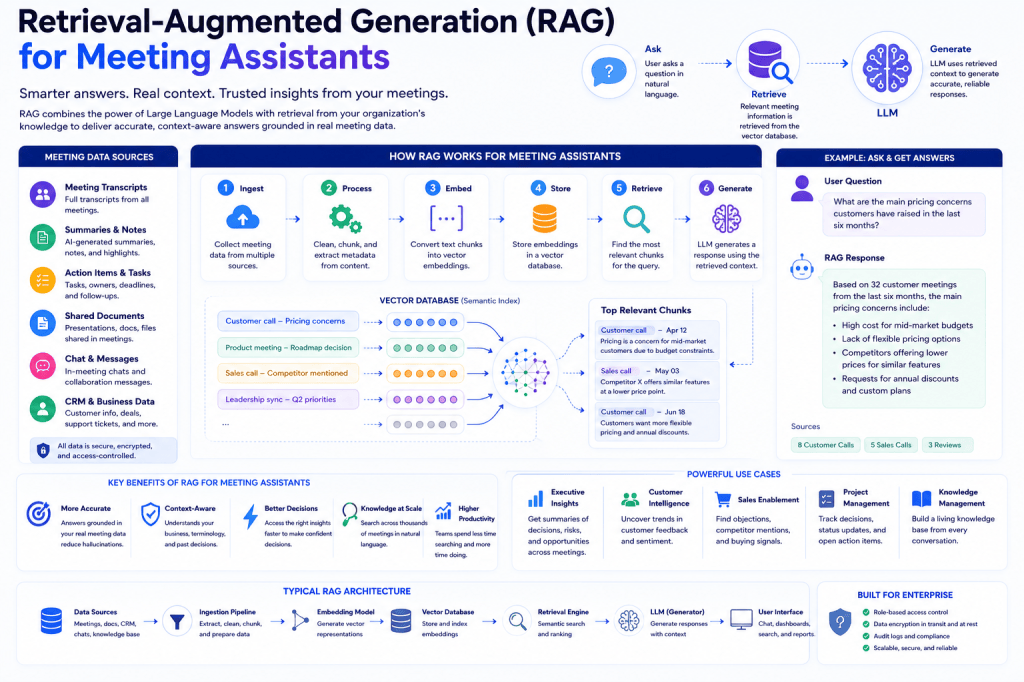
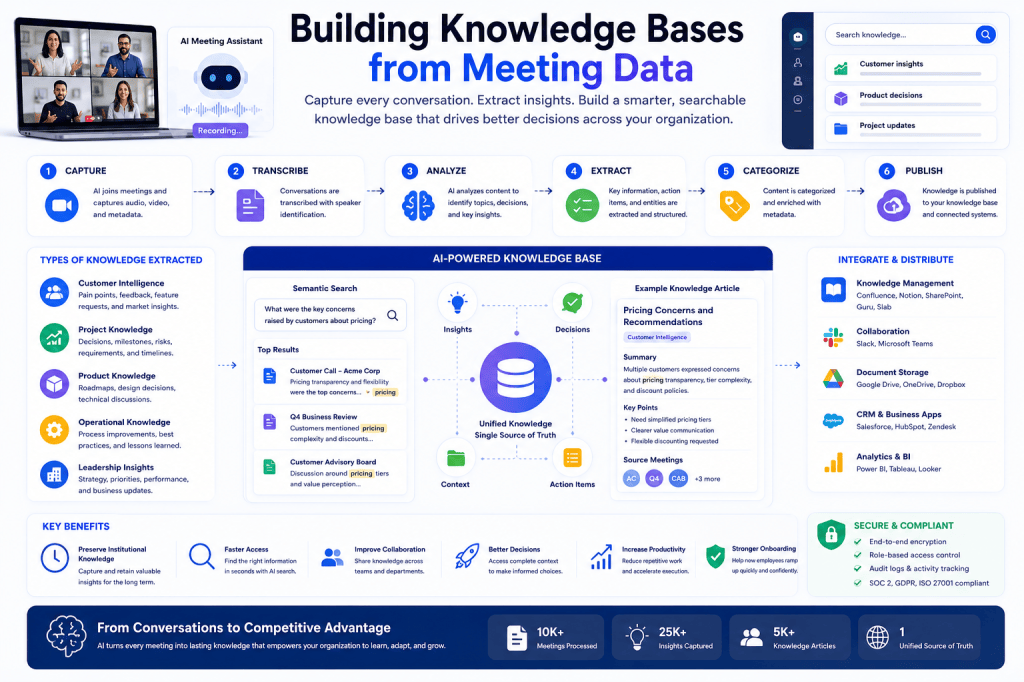
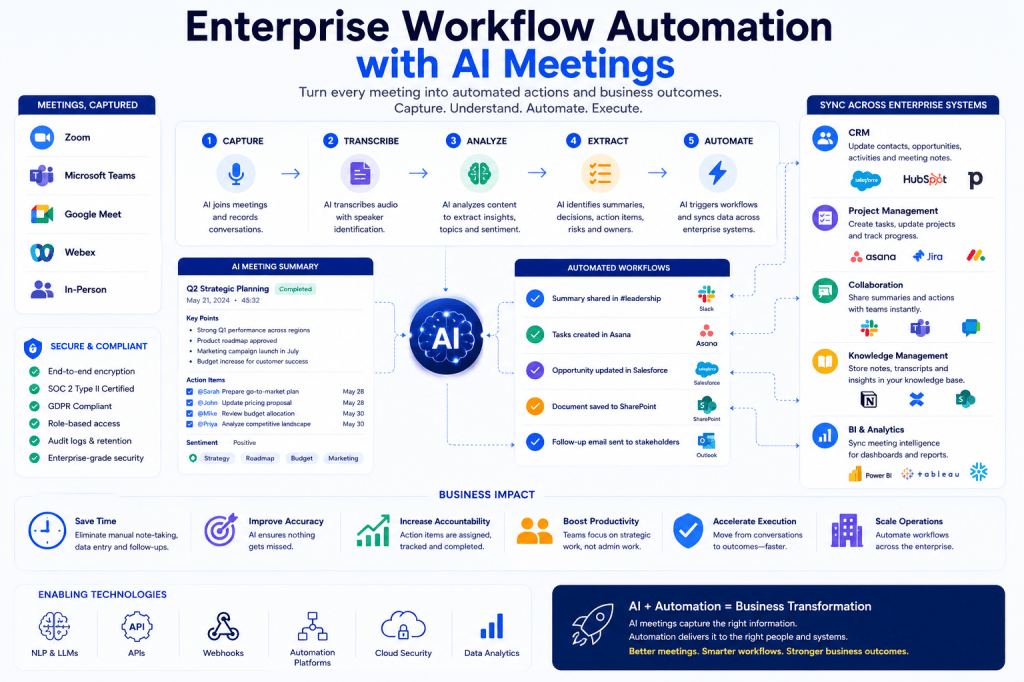
 Meeting Notes AI