Meeting transcription has rapidly evolved from a simple convenience feature into one of the most important components of modern workplace productivity. Today’s AI meeting assistants can automatically capture conversations, identify speakers, generate summaries, extract action items, and create searchable meeting records within minutes.
However, the future of meeting transcription extends far beyond converting speech into text. Advances in artificial intelligence, large language models, speech recognition, multimodal AI, and workplace automation are transforming meeting assistants into intelligent collaboration platforms capable of understanding, analyzing, and acting on conversations in real time.
As organizations increasingly rely on digital communication, the next generation of meeting transcription technology will fundamentally change how meetings are conducted, documented, and utilized.
How Meeting Transcription Has Evolved
The first generation of transcription tools focused primarily on recording conversations and generating basic text transcripts.
These systems often struggled with:
- Background noise
- Accents and dialects
- Multiple speakers
- Technical terminology
- Audio quality issues
Modern AI meeting assistants have significantly improved through advances in:
- Automatic Speech Recognition (ASR)
- Speaker diarization
- Audio enhancement
- Natural Language Processing (NLP)
- Large Language Models (LLMs)
Today, transcription serves as the foundation for broader meeting intelligence capabilities.
The next phase will focus on understanding conversations rather than simply recording them.
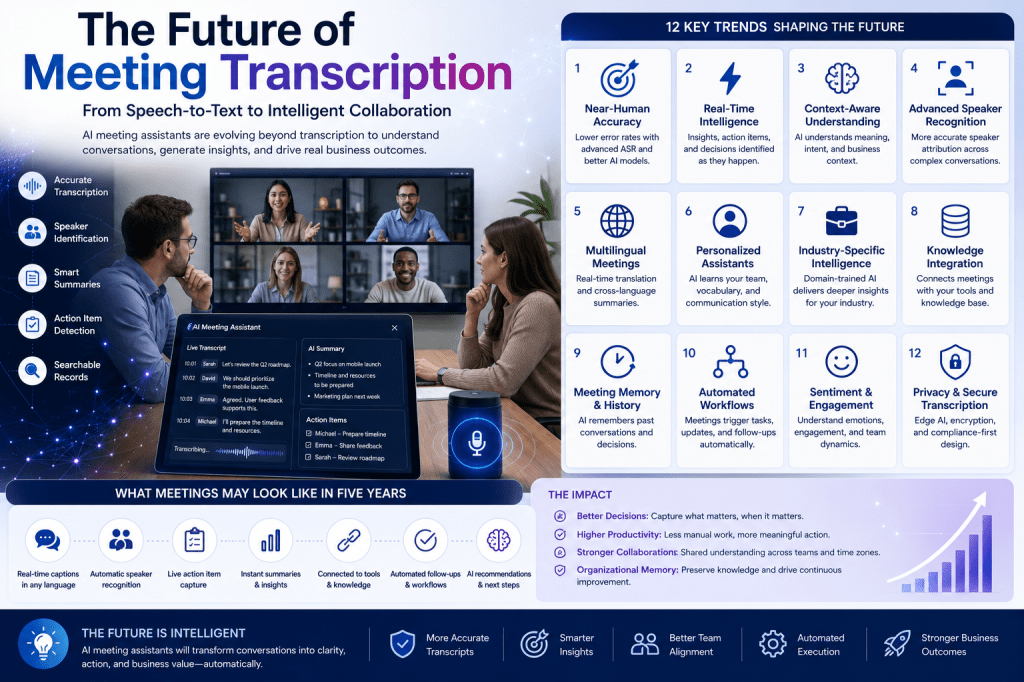
Trend 1: Near-Human Transcription Accuracy
Speech recognition accuracy continues to improve every year.
Future systems will benefit from:
- Larger training datasets
- Better multilingual models
- Improved acoustic modeling
- More diverse speaker representation
- Enhanced context awareness
Many experts expect transcription systems to achieve near-human performance across a wide range of meeting environments.
This improvement will be particularly noticeable in:
- Noisy environments
- Hybrid meetings
- Technical discussions
- Global teams
- Industry-specific conversations
As Word Error Rates continue to decline, organizations will gain greater confidence in AI-generated meeting records.
Trend 2: Real-Time Meeting Intelligence
Current AI meeting assistants often generate summaries after meetings conclude.
Future platforms will provide insights while meetings are still happening.
Examples include:
Live Action Item Detection
The AI will identify tasks and commitments as they occur.
Decision Tracking
Important decisions will be recognized and documented instantly.
Topic Monitoring
AI systems will automatically track discussion themes and agenda progress.
Follow-Up Recommendations
Meeting assistants may suggest next steps before meetings even end.
This shift from transcription to real-time intelligence represents one of the most significant developments in workplace AI.
Trend 3: Context-Aware Understanding
Today’s transcription systems primarily focus on recognizing words.
Future systems will understand meaning.
For example, instead of simply recording:
“Let’s move the launch to next month.”
Future AI systems will understand:
- Which product is being discussed
- Why the launch is delayed
- Which teams are affected
- What dependencies exist
- Which action items are required
This deeper contextual understanding will significantly improve meeting summaries and business insights.
Trend 4: Advanced Speaker Recognition
Speaker identification remains one of the most challenging aspects of meeting intelligence.
Future systems will provide:
- More accurate speaker attribution
- Voice-based participant recognition
- Cross-meeting speaker consistency
- Improved handling of overlapping conversations
Meeting assistants may eventually create communication profiles that help organizations understand collaboration patterns across teams.
Trend 5: Multilingual and Cross-Language Meetings
Global collaboration is increasing rapidly.
Future AI meeting assistants will offer seamless multilingual support.
Capabilities may include:
Real-Time Translation
Participants speak different languages while receiving instant translations.
Cross-Language Summaries
Meeting summaries generated in multiple languages automatically.
Mixed-Language Transcription
Accurate transcription of conversations that switch between languages.
Global Knowledge Sharing
Meeting insights shared across international teams without language barriers.
This development could dramatically improve communication in multinational organizations.
Trend 6: Personalized Meeting Assistants
Future transcription systems will become more personalized.
AI meeting assistants may learn:
- Individual speaking styles
- Frequently used terminology
- Preferred summary formats
- Team-specific workflows
- Organizational vocabulary
As a result, transcription accuracy and meeting intelligence quality will improve over time.
Each organization may effectively develop a customized meeting assistant trained on its own communication patterns.
Trend 7: Industry-Specific Meeting Intelligence
General-purpose transcription is only the beginning.
Future solutions will increasingly specialize for specific industries.
Healthcare
- Clinical documentation
- Medical terminology recognition
- Regulatory compliance
Legal
- Contract discussions
- Case references
- Compliance tracking
Sales
- Objection detection
- Customer sentiment analysis
- Revenue intelligence
Software Development
- Technical terminology
- Product discussions
- Sprint planning insights
Industry-specific models will improve accuracy and generate more valuable insights.
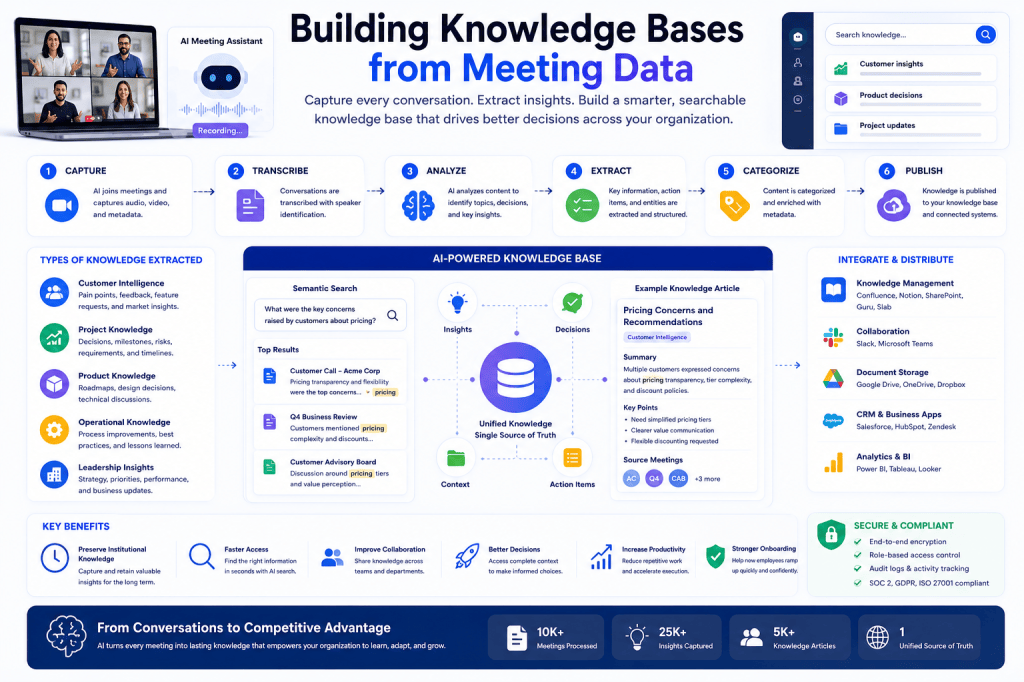
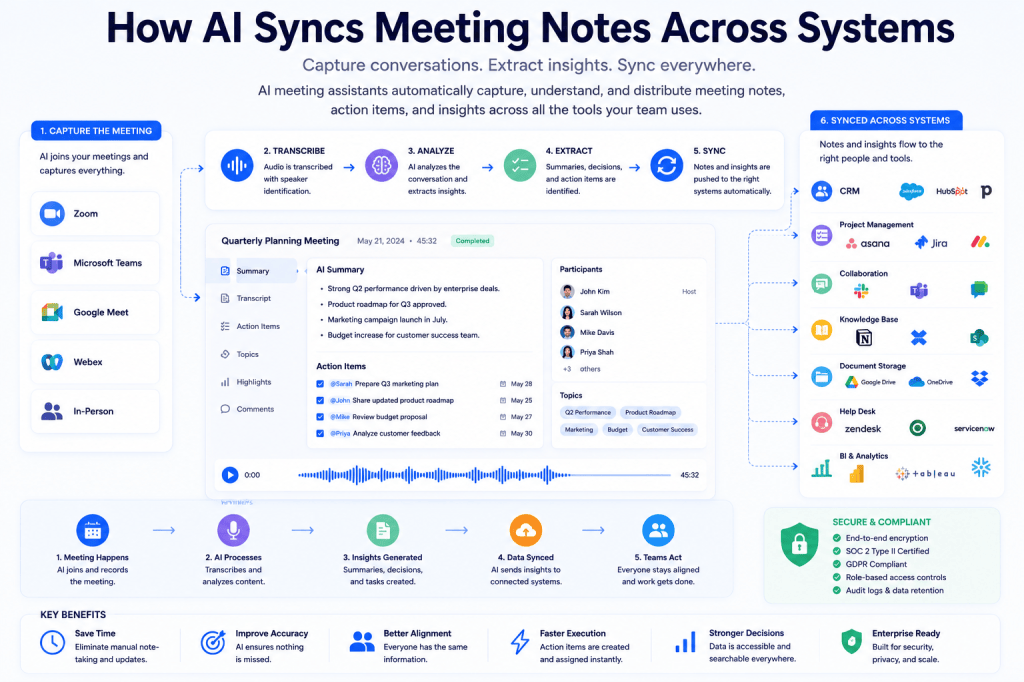
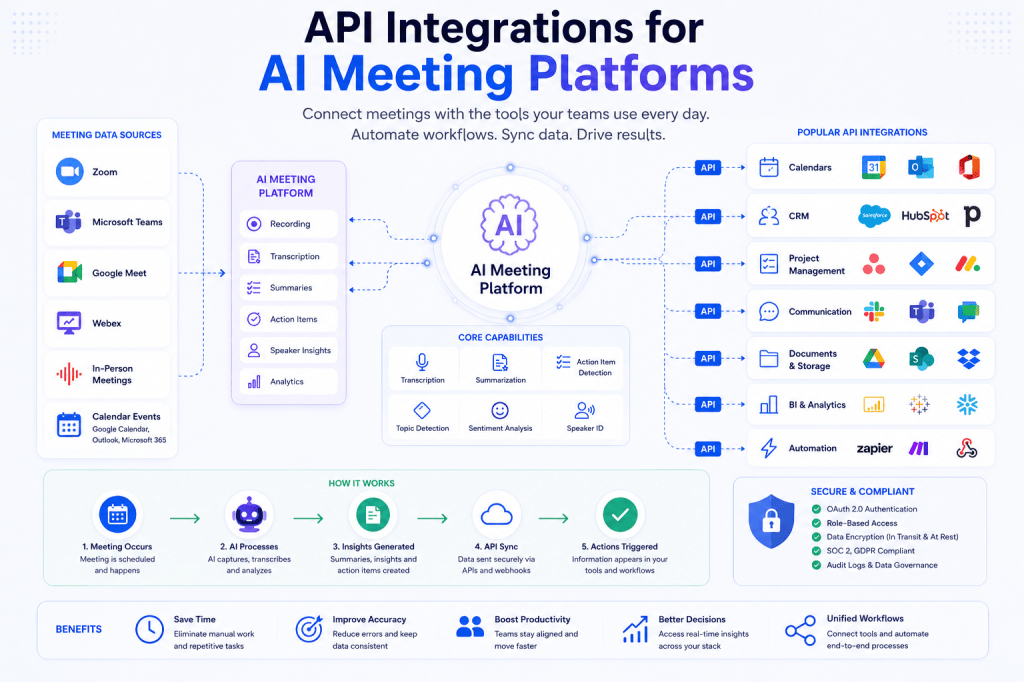
Trend 8: Integration with Organizational Knowledge Systems
Today’s meeting transcripts often remain isolated within meeting platforms.
Future systems will integrate deeply with organizational knowledge repositories.
Meeting assistants may automatically connect discussions with:
- Project management systems
- CRM platforms
- Documentation repositories
- Internal knowledge bases
- Customer records
This will transform meeting transcripts into active organizational knowledge assets.
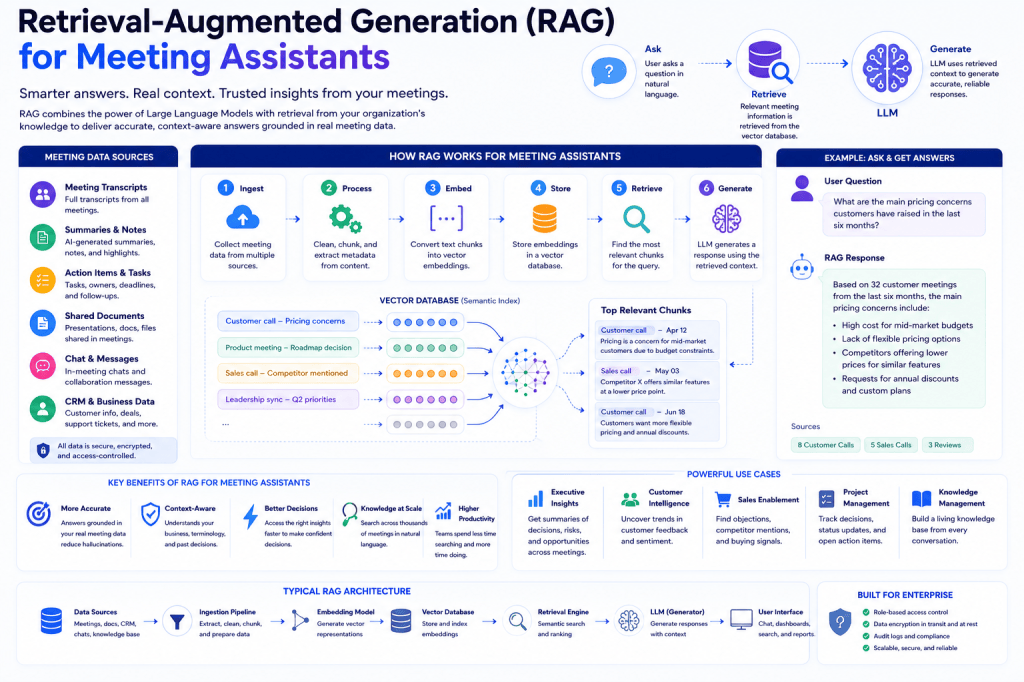
Trend 9: Meeting Memory and Long-Term Context
One of the most exciting developments involves persistent meeting memory.
Future AI systems may remember:
- Previous meetings
- Historical decisions
- Past commitments
- Project timelines
- Team discussions
Imagine asking:
“What decisions did we make about this project over the past six months?”
The AI meeting assistant could instantly retrieve and summarize relevant conversations.
This capability could dramatically improve organizational memory and decision-making.
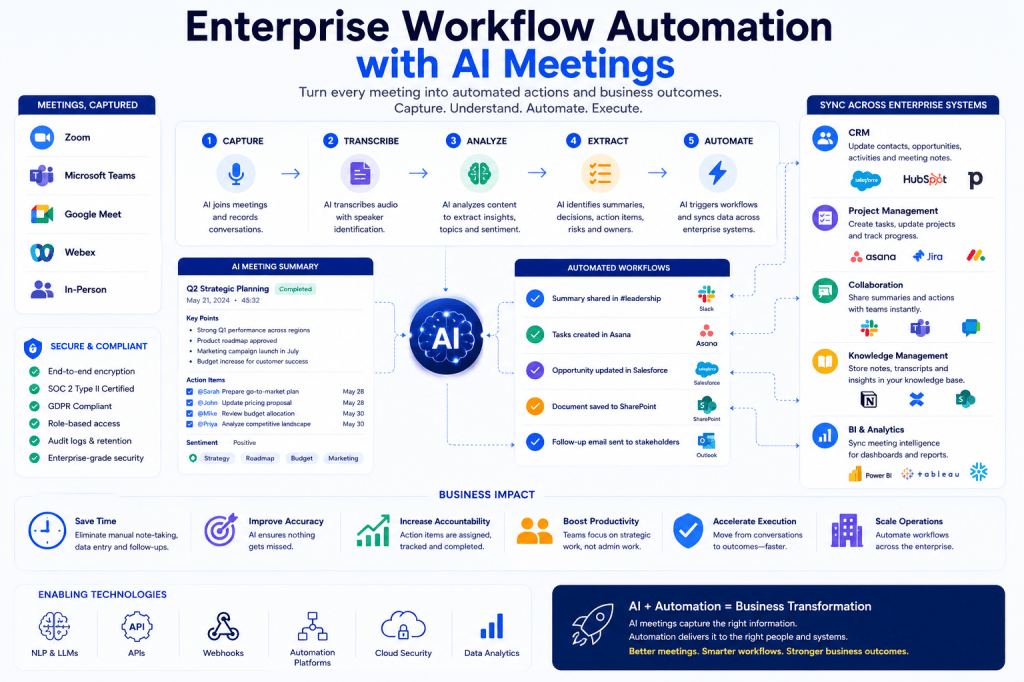
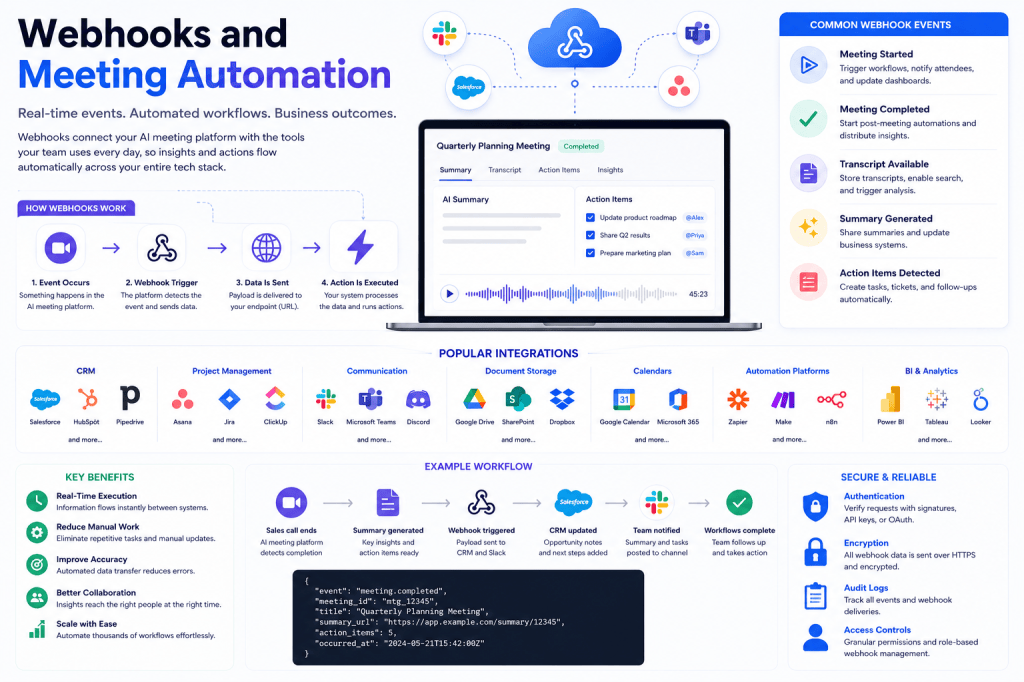
Trend 10: Automated Workflow Execution
The future of meeting transcription extends beyond documentation.
AI systems will increasingly take action.
Examples include:
- Creating tasks automatically
- Updating project plans
- Scheduling follow-up meetings
- Sending summaries
- Updating CRM records
- Assigning responsibilities
Meetings will become triggers for automated business workflows.
This evolution will significantly reduce administrative workload.
Trend 11: Emotion and Sentiment Analysis
Future meeting assistants may analyze conversational dynamics.
Potential capabilities include:
- Sentiment tracking
- Participant engagement analysis
- Emotional tone detection
- Meeting effectiveness measurement
- Team collaboration insights
These features could help leaders better understand team health and communication patterns.
Trend 12: Privacy-Preserving AI Transcription
As AI adoption grows, privacy will become increasingly important.
Future systems are likely to incorporate:
- On-device processing
- Edge AI transcription
- Data minimization techniques
- Enhanced encryption
- Regulatory compliance controls
Organizations will demand AI solutions that balance intelligence with privacy and security.
Challenges That Must Still Be Solved
Despite rapid progress, several challenges remain.
Complex Conversations
Human communication remains highly nuanced.
Overlapping Speech
Multiple speakers continue to create difficulties for transcription systems.
Context Ambiguity
AI still struggles with implicit meaning and assumptions.
Privacy Concerns
Organizations must carefully manage sensitive meeting data.
Trust and Adoption
Employees need confidence that AI-generated outputs are accurate and secure.
Addressing these challenges will be critical for future adoption.
What Meetings May Look Like in Five Years
A typical meeting in the near future may involve:
- Real-time multilingual captions
- Automatic participant recognition
- Live action item generation
- Continuous project tracking
- Instant summaries
- Automated workflow updates
- Historical context retrieval
- AI-generated recommendations
Instead of acting as passive note-takers, AI meeting assistants will become active participants in workplace collaboration.
Conclusion
The future of meeting transcription extends far beyond speech-to-text technology. Advances in artificial intelligence, large language models, multilingual processing, contextual understanding, and workflow automation are transforming AI meeting assistants into comprehensive meeting intelligence platforms. Future systems will not only capture conversations but also understand context, identify decisions, track commitments, automate workflows, and preserve organizational knowledge. As these technologies continue to mature, meeting transcription will evolve from a documentation tool into a central component of workplace productivity, collaboration, and business intelligence.