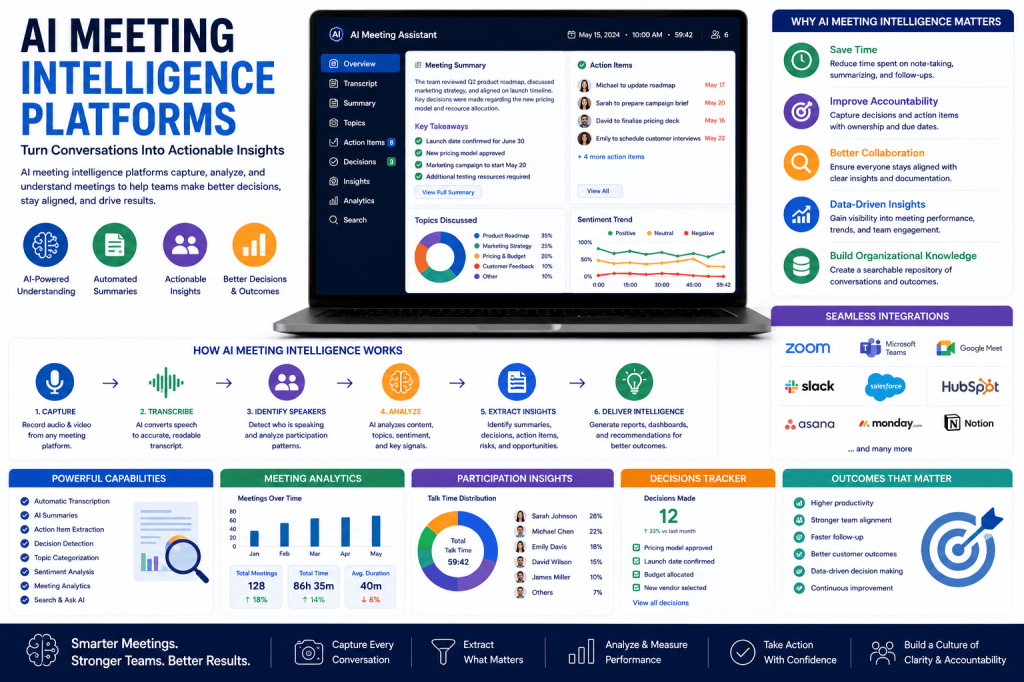
Meetings generate some of the most valuable information inside an organization. Decisions are made, strategies are discussed, customer feedback is shared, projects are reviewed, and action items are assigned. For decades, much of this information remained trapped inside recordings, handwritten notes, or the memories of meeting participants.
Today, AI Meeting Intelligence Platforms are changing how organizations capture, understand, and use meeting information. These platforms go far beyond simple recording and transcription. They analyze conversations, identify key insights, detect decisions, track action items, measure engagement, and transform meetings into searchable business intelligence.
As artificial intelligence continues to advance, AI Meeting Intelligence Platforms are becoming an essential part of modern workplace productivity, collaboration, and knowledge management.
What Is an AI Meeting Intelligence Platform?
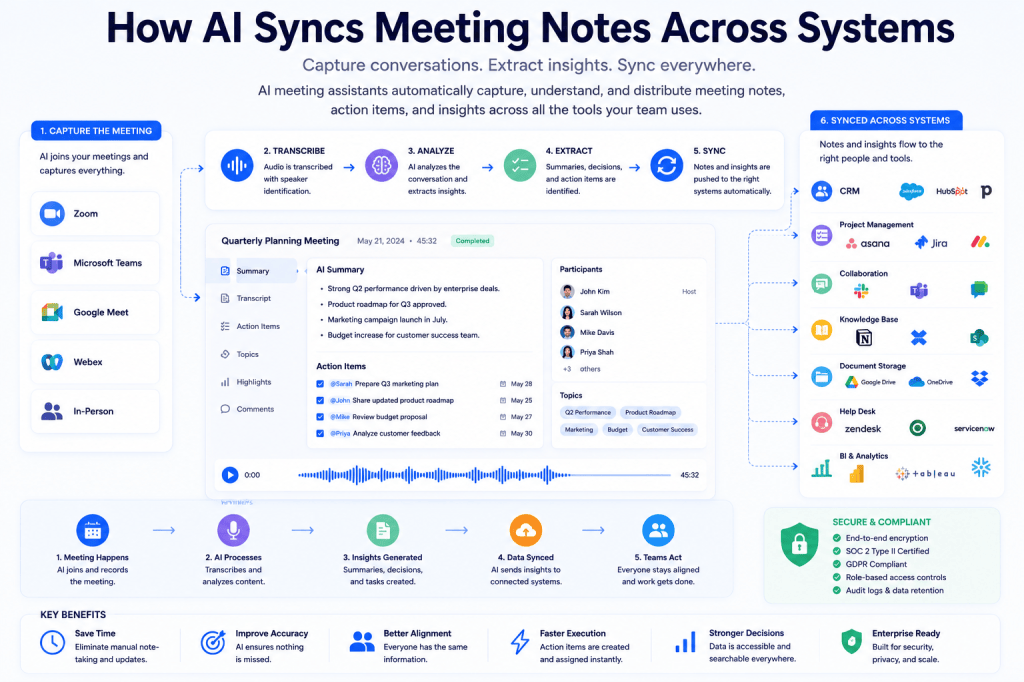
An AI Meeting Intelligence Platform is a software solution that uses artificial intelligence to capture, analyze, organize, and generate insights from meetings and conversations.
Unlike traditional meeting recording tools, these platforms provide a complete intelligence layer that helps organizations understand what happened during meetings and what actions should follow.
Typical capabilities include:
- Meeting recording
- Speech-to-text transcription
- AI-generated summaries
- Action item extraction
- Decision detection
- Topic categorization
- Sentiment analysis
- Meeting analytics
- Searchable knowledge repositories
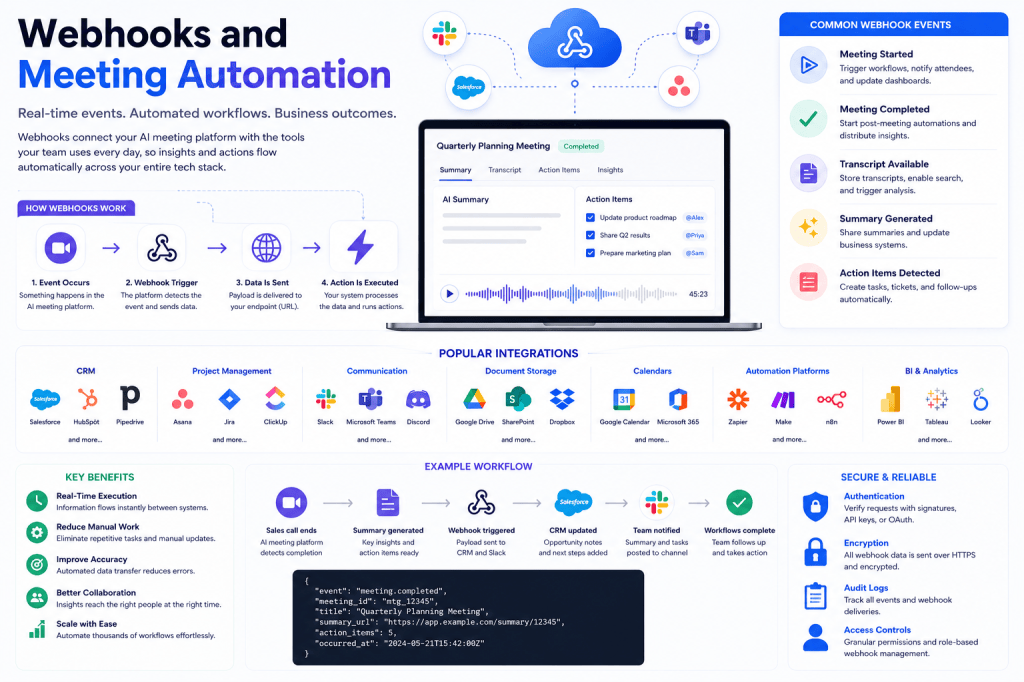
- Workflow automation
The goal is to transform conversations into actionable organizational intelligence.
How AI Meeting Intelligence Platforms Differ from Traditional Meeting Software
Traditional meeting platforms focus primarily on communication.
Examples include:
- Video conferencing
- Screen sharing
- Chat messaging
- File sharing
AI Meeting Intelligence Platforms add a second layer:
Conversation Understanding
Instead of simply hosting meetings, they actively analyze and interpret discussions.
This shift represents a major evolution in workplace collaboration technology.
Why Organizations Are Adopting Meeting Intelligence Platforms
Modern organizations face several challenges:
- Too many meetings
- Information overload
- Lost knowledge
- Inconsistent documentation
- Missed action items
- Poor follow-up
- Limited visibility into decisions
AI Meeting Intelligence Platforms help address these problems by automatically capturing and organizing meeting outcomes.
Benefits include:
- Increased productivity
- Better accountability
- Faster decision-making
- Improved collaboration
- Stronger knowledge management
- Reduced administrative workload
These advantages are driving rapid adoption across industries.
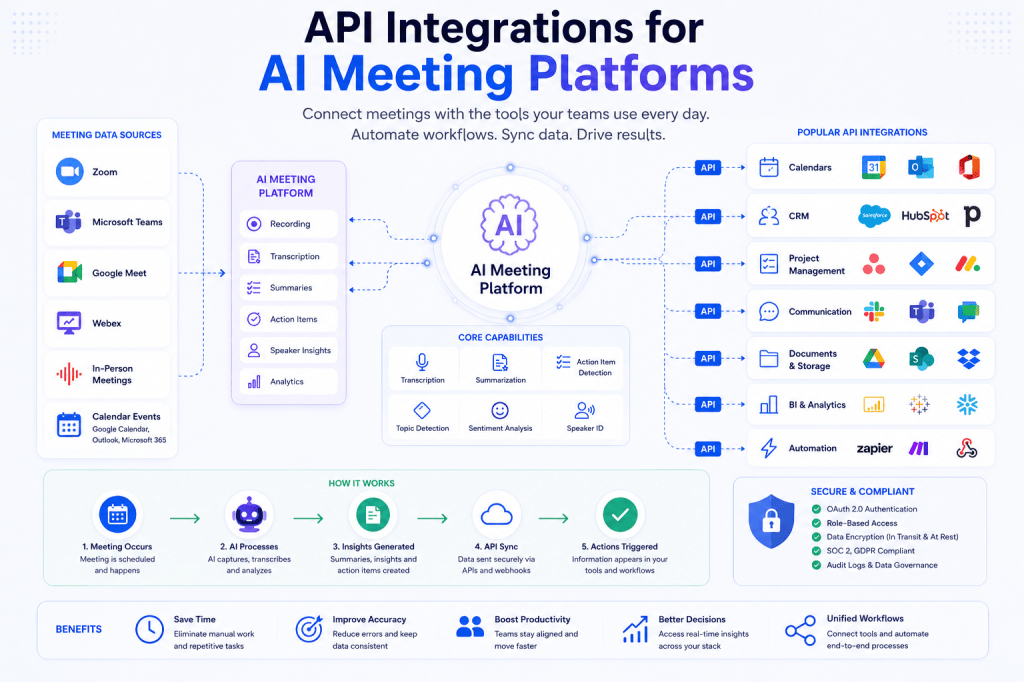
Core Components of an AI Meeting Intelligence Platform
Most platforms rely on several interconnected technologies.
Meeting Capture
The platform records conversations from:
- Zoom
- Microsoft Teams
- Google Meet
- Phone calls
- In-person meetings
- Hybrid meetings
Audio and video become the foundation for intelligence generation.
Automatic Speech Recognition (ASR)
Speech recognition converts spoken conversations into text.
Modern ASR systems can handle:
- Multiple speakers
- Accents and dialects
- Technical terminology
- Multilingual discussions
Transcription serves as the starting point for all subsequent analysis.
Speaker Identification
Speaker diarization identifies who is speaking throughout a meeting.
This enables:
- Speaker attribution
- Participation analytics
- Accountability tracking
- Meeting summaries by participant
Accurate speaker identification is essential for meeting intelligence.
Natural Language Processing
Natural Language Processing (NLP) helps AI understand language structure and meaning.
NLP enables platforms to:
- Detect topics
- Identify intent
- Understand context
- Extract meaningful information
Without NLP, transcripts would remain unstructured text.
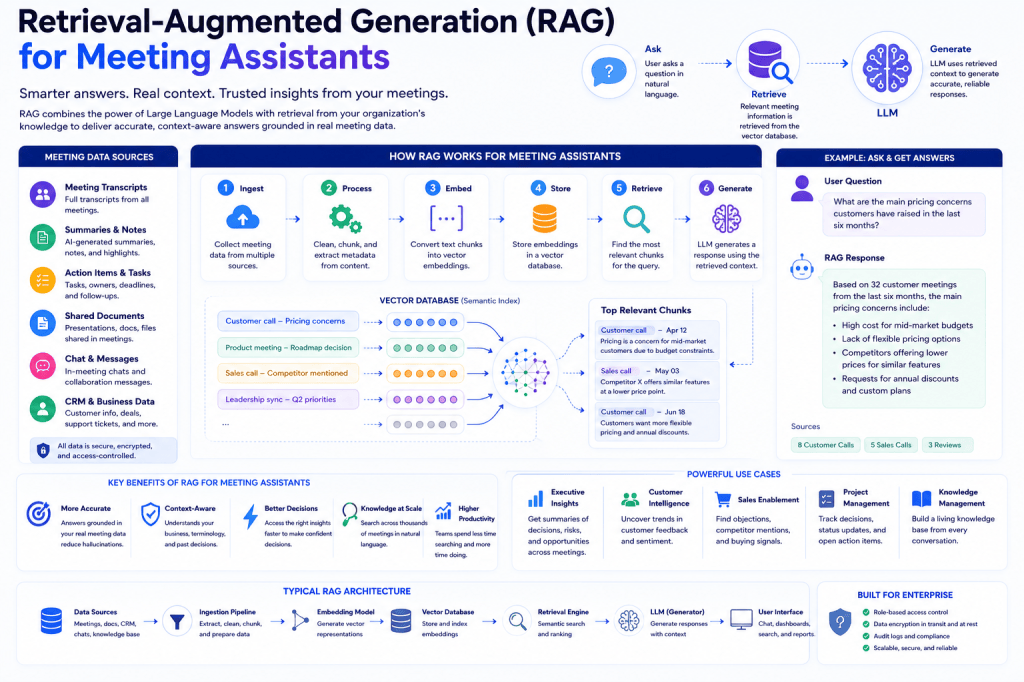
Large Language Models (LLMs)
Large Language Models have dramatically improved meeting intelligence capabilities.
LLMs help platforms:
- Generate summaries
- Detect decisions
- Identify action items
- Extract key takeaways
- Understand context
- Answer questions about meetings
This technology has transformed meeting assistants into intelligent workplace tools.
Key Features of AI Meeting Intelligence Platforms
AI Meeting Summaries
One of the most popular capabilities.
The AI automatically generates concise summaries that include:
- Discussion highlights
- Decisions
- Action items
- Risks
- Follow-up requirements
Participants can quickly understand what happened without reviewing entire transcripts.
Action Item Detection
AI identifies tasks and commitments discussed during meetings.
Example:
Action Item
Michael to update the project roadmap by Friday.
Automatic task extraction improves accountability and execution.
Decision Detection
Platforms identify decisions that emerge during discussions.
Example:
Decision
Product launch moved to October 15.
Decision tracking helps organizations preserve institutional knowledge.
Topic Detection and Categorization
AI groups conversations into meaningful topics.
Examples:
- Product Development
- Marketing
- Finance
- Customer Success
- Engineering
This makes meeting content easier to search and analyze.
Key Takeaway Extraction
Platforms identify the most important information from discussions.
Examples:
- Decisions
- Risks
- Opportunities
- Strategic insights
This helps users focus on what matters most.
Sentiment Analysis
AI evaluates emotional tone and participant attitudes.
Examples:
- Positive sentiment
- Concern indicators
- Team engagement
- Customer reactions
These insights support better leadership and decision-making.
Meeting Analytics
Platforms generate data-driven insights about meetings.
Metrics may include:
- Participation rates
- Decision counts
- Action item completion
- Meeting effectiveness
- Topic frequency
Meeting analytics help organizations optimize collaboration.
How Meeting Intelligence Creates Business Value
Meeting intelligence platforms create value in multiple ways.
Productivity Improvements
Teams spend less time:
- Taking notes
- Writing summaries
- Searching transcripts
- Following up manually
Automation reduces administrative burden.
Better Accountability
Action items and decisions are automatically documented.
Ownership becomes clearer.
Follow-up improves.
Faster Decision-Making
Important decisions become visible immediately.
Organizations can move from discussion to execution more quickly.
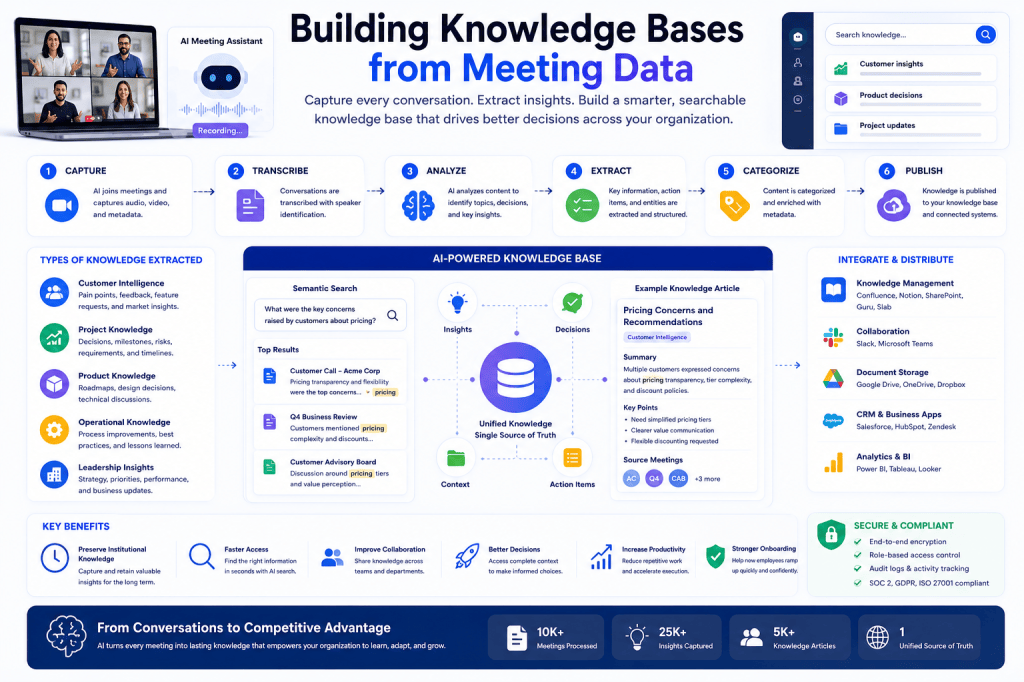
Stronger Knowledge Management
Meeting intelligence platforms create searchable repositories of organizational knowledge.
Information becomes easier to find and reuse.
Improved Collaboration
Participants stay aligned through consistent documentation and shared visibility.
Industry Use Cases
Sales Teams
Meeting intelligence platforms help:
- Analyze customer conversations
- Detect buying signals
- Track objections
- Improve sales coaching
Customer Success Teams
AI identifies:
- Customer concerns
- Escalation risks
- Satisfaction trends
- Renewal opportunities
Product Teams
Platforms capture:
- Feature requests
- Roadmap discussions
- User feedback
- Development priorities
Executive Teams
Meeting intelligence supports:
- Strategic planning
- Decision tracking
- Organizational alignment
- Governance
Human Resources
HR teams can analyze:
- Candidate interviews
- Performance discussions
- Training sessions
- Employee engagement
Meeting intelligence benefits virtually every department.
Popular AI Meeting Intelligence Platforms
Several platforms have emerged as leaders in this space.
Examples include:
- Otter AI
- Fireflies AI
- Fathom
- Avoma
- tl;dv
- Gong
- Chorus
- Read AI
Each platform emphasizes different capabilities, but all focus on extracting value from conversations.
Challenges and Limitations
Despite rapid progress, challenges remain.
Transcription Accuracy
Poor audio quality can affect results.
Context Interpretation
Human conversations are often nuanced.
Privacy Concerns
Meeting data requires strong governance.
Industry-Specific Language
Technical terminology can be difficult to interpret.
User Adoption
Organizations must build trust in AI-generated outputs.
These challenges continue to drive innovation.
The Future of AI Meeting Intelligence Platforms
The next generation of meeting intelligence platforms will become even more sophisticated.
Future capabilities may include:
Real-Time Meeting Intelligence
Insights generated during conversations.
Predictive Recommendations
AI suggesting next steps automatically.
Organizational Memory
Connecting information across years of meetings.
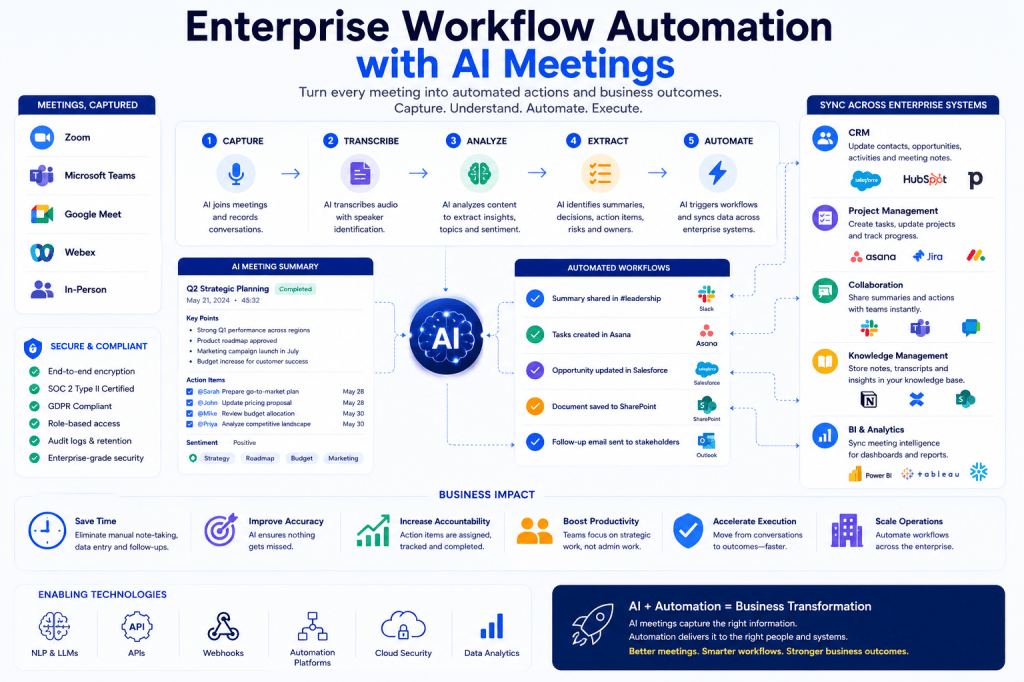
Workflow Automation
Automatically updating project management systems.
Cross-Meeting Analytics
Identifying trends across thousands of conversations.
Personalized Insights
Tailored recommendations for each participant.
The future of meeting intelligence extends far beyond transcription.
Meeting Intelligence as a Competitive Advantage
Organizations that effectively leverage meeting intelligence gain access to valuable information that was previously difficult to capture.
Benefits include:
- Faster execution
- Better collaboration
- Improved customer understanding
- Enhanced decision-making
- Stronger organizational memory
As AI becomes increasingly integrated into workplace technology, meeting intelligence is likely to become a standard business capability.
Conclusion
AI Meeting Intelligence Platforms represent the next evolution of workplace collaboration technology. By combining speech recognition, natural language processing, large language models, meeting analytics, sentiment analysis, decision detection, and action item extraction, these platforms transform conversations into actionable business intelligence. Organizations can improve productivity, strengthen accountability, preserve knowledge, and make better decisions by unlocking the value hidden within meetings. As artificial intelligence continues to advance, meeting intelligence platforms will become increasingly central to how organizations communicate, collaborate, and operate.

 Meeting Notes AI